
Children Stopped at the School Gate: Education Rights of Migrant Workers' Children
- The UN Convention on the Rights of the Child guarantees education to every child, whatever their parents' status.
- Enrolment alone is not enough: language, relationships and family insecurity decide whether children stay and learn.
- The US and UK anchor access in law and language support, which offers useful comparisons.
Contents
Children of migrant workers have a right to education under the UN Convention on the Rights of the Child, whatever their parents' nationality or immigration status, and in Korea a school can admit them on proof of residence even without status documents. Yet getting through the school gate is only the start: language, friendships and family insecurity decide whether a child stays and learns. This guide explains the legal framework, the barriers inside school and how to present interview research responsibly, with comparisons from the United States and the United Kingdom.
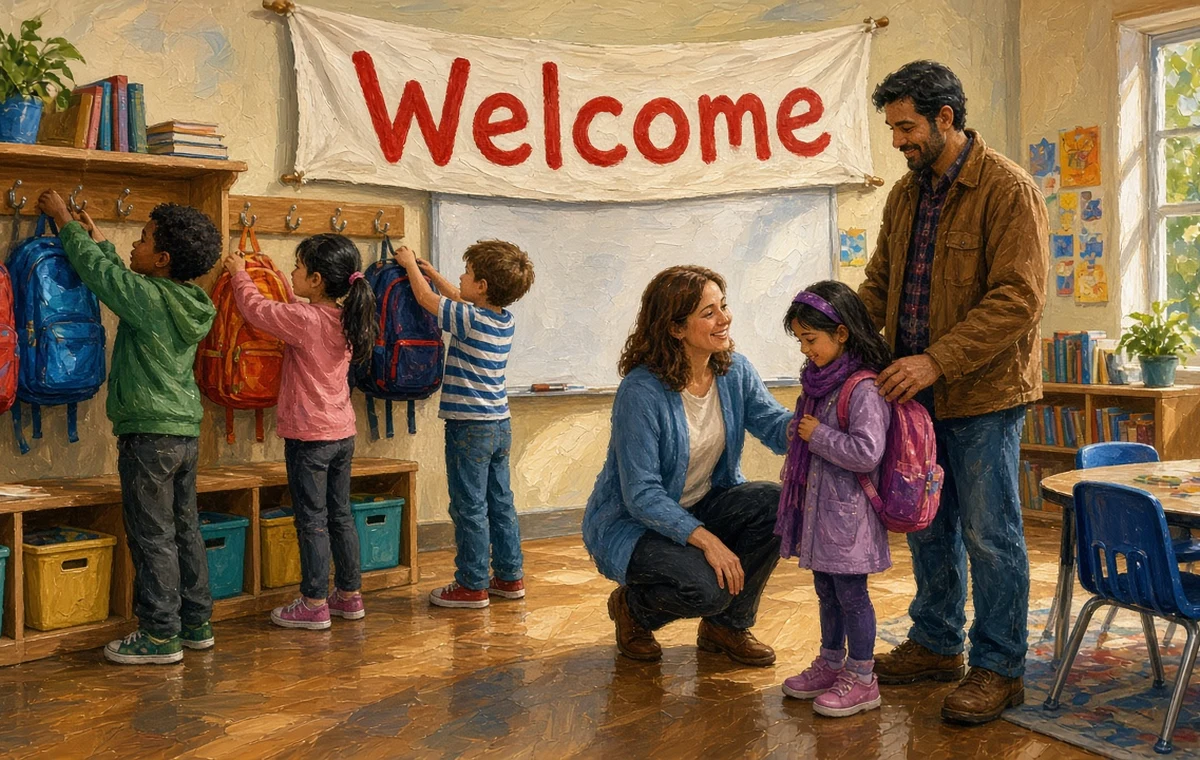
Picture a ten-year-old who arrives mid-year, speaks little of the classroom language and goes home to parents working long shifts with uncertain visas. On paper, the school door is open. In practice, every school day can feel like a test. That gap between rights and reality is what this topic is really about.
Which rules guarantee the right to education?
The UN Convention on the Rights of the Child was adopted in 1989, and Korea joined in 1991. Article 2 bans discrimination based on a child's or parent's status, and Article 28 recognises every child's right to education, with free and compulsory primary schooling.
Student money tip from CampusDown Repair UpLandlord repair request letter template you can copy — what to include, how to send it, a follow-up version and how to keep a paper trail.
What does Korean law add?
Korea's Enforcement Decree of the Elementary and Secondary Education Act lets a child enrol or transfer if residence can be confirmed, even without documents proving immigration status. When you present the framework, separate international conventions from domestic law and write one line on what each guarantees.
| Term | Meaning |
|---|---|
| Right to education | Every child's entitlement to schooling, protected by UNCRC Article 28 |
| Non-discrimination | Rights apply regardless of the child's or parents' status, UNCRC Article 2 |
| Permissive equality | Access is allowed on paper, but active support is missing |
| English as an additional language (EAL) | UK term for pupils learning English alongside their curriculum |
Many textbooks group children's rights into survival, protection, development and participation. That grouping is a popular UNICEF-style summary rather than wording from the Convention itself, so cite it as a framework.

How do the US and the UK protect migrant children's schooling?
Both countries offer strong legal anchors that work well as comparison points in a presentation.
- United States: in Plyler v. Doe (1982) the Supreme Court struck down a Texas law that let schools exclude undocumented children, ruling that states cannot deny them a free public education. In Lau v. Nichols (1974) the Court held that placing non-English-speaking pupils in ordinary classes without language help denied them equal access. Today, Title III of the Every Student Succeeds Act funds support for English learners.
- United Kingdom: in England every child of compulsory school age has a right to a state school place regardless of immigration status. When nationality and country-of-birth questions were added to the school census in 2016, campaigners warned they could deter families, and the government stopped collecting that data in 2018.
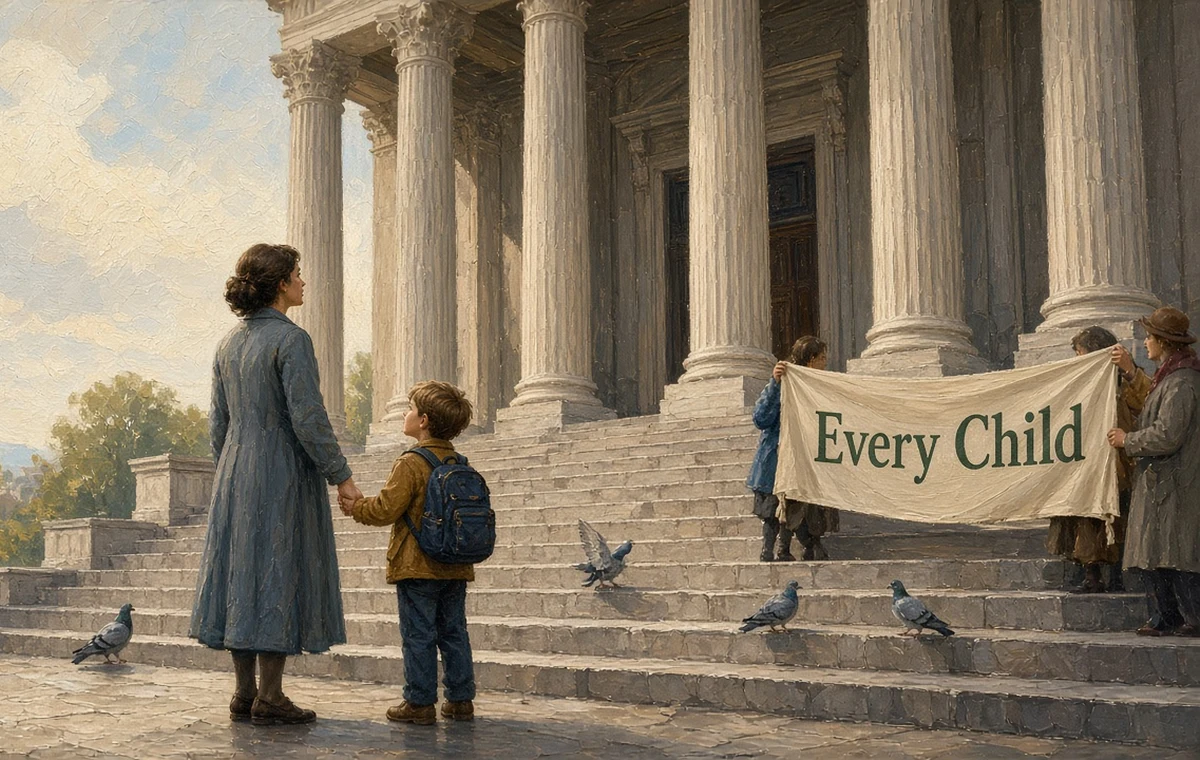
These cases show that the right to enrol often had to be fought for, and that language support was recognised as part of equal access rather than an optional extra.
Skimming the section headings first makes a long guide much easier to map out. Try writing down one question of your own as you read.
Why is the school gate still so high?
Even when enrolment is legally allowed, attending and staying are another matter. Children may struggle to follow lessons in a new language, be teased for their appearance or background, or miss school because of parents' insecure jobs and worries about their residence status.
Why do language and relationships matter so much?
A classroom door may be open, but a child who feels alone inside still faces a barrier. Some researchers describe this as being stuck at permissive equality: the door is open, but active support is lacking. Group the difficulties into language, relationships, family circumstances and institutions to show how wide the problem really is.
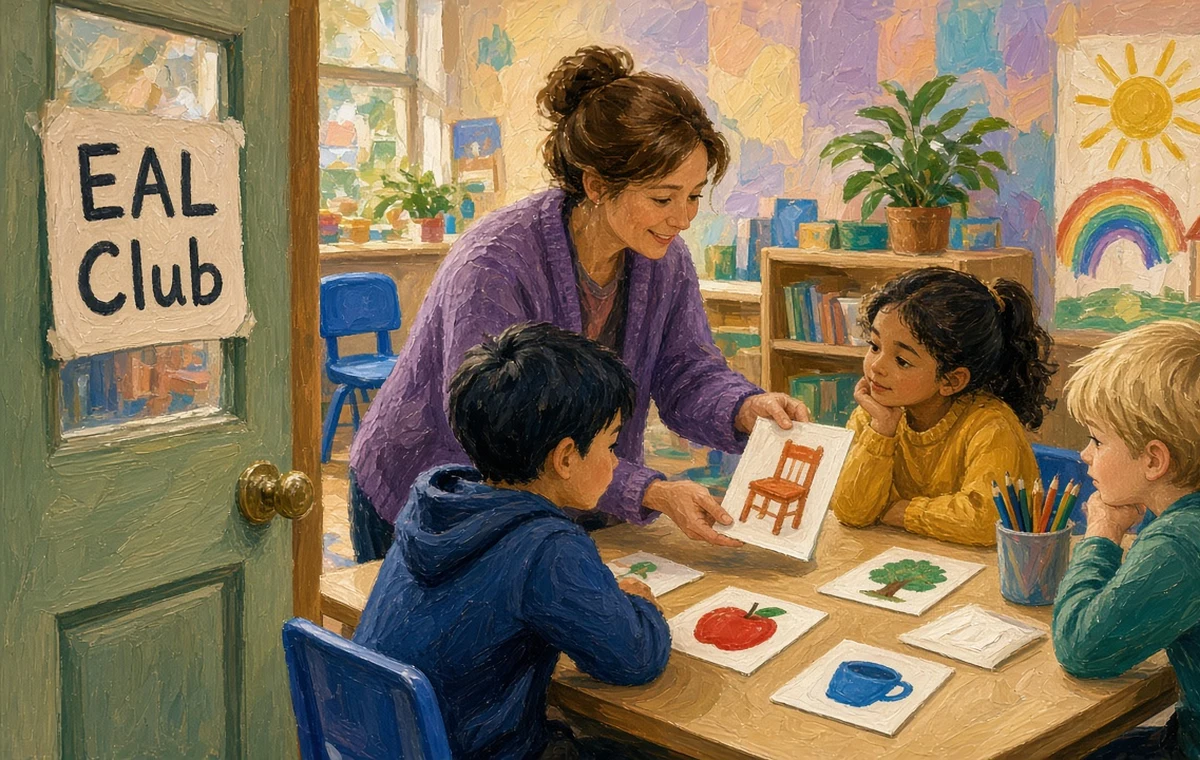
In UK schools, EAL support ranges from small-group sessions to bilingual teaching assistants, and the quality varies widely between schools. That variation is itself a useful discussion point.
Why should society support these children?
Arguments come at three levels: humanitarian, because every child has dignity; social integration, because excluded groups weaken communities; and economic, because these children will help run the society of the future. Multiculturalism, the search for ways people of different cultures can live together as equals, provides the theoretical backdrop.
| Aspect | Korea (source perspective) | United States | United Kingdom |
|---|---|---|---|
| Legal basis for access | UNCRC (joined 1991), enrolment on proof of residence | Plyler v. Doe (1982) | Right to a school place regardless of immigration status |
| Language support | Often limited, described as permissive equality | Lau v. Nichols (1974), ESSA Title III | EAL provision in schools |
| Data and trust | Parents' residence worries affect attendance | Federal guidance warns schools not to bar children over immigration documents | Nationality data collection dropped in 2018 |
Pair each of the three arguments with one concrete support measure, such as language classes, counselling or links with local community centres, and the case becomes far more persuasive.
Where do students usually go wrong?
When students present in-depth interview studies, the most common mistake is turning a handful of stories into a picture of all migrant children. Other pitfalls are quoting old migrant worker numbers as if current, and portraying the children only as pitiable.
- Did you separate international conventions from domestic law?
- Did you distinguish access from day-to-day school life?
- Did you state the scope of the interviews?
- Do your statistics come from the latest official sources?
- Did you propose concrete support?
For example, if one participant nearly dropped out because she could not follow lessons, say that it is one person's experience, show the overall scale with up-to-date official figures, and then propose the support she needed.
How should you end the presentation?
Close by arguing that opening the door is not enough: children need language support, counselling and local partnerships to stay and learn. For the rights framework see the four rights of the child, and for the theory of living together see multiculturalism.
Student money tip on CampusDown Repair Up: Landlord repair request letter template you can copy.
End with one concrete proposal and a question to the audience. A specific idea, such as a buddy scheme for new arrivals, stays in people's minds far longer than a general appeal.
Reviewed by the CampusDown editorial team, November 2026. References: UN Convention on the Rights of the Child (1989); Plyler v. Doe, 457 U.S. 202 (1982); Lau v. Nichols, 414 U.S. 563 (1974).
FAQ
Do undocumented children have the right to go to school in the US?
Yes. In Plyler v. Doe (1982) the Supreme Court ruled that states cannot deny undocumented children a free public education.
Can a child get a school place in England regardless of immigration status?
Yes. Children of compulsory school age in England have a right to a state school place regardless of their immigration status.
What is permissive equality?
A situation where access is allowed on paper but active support, such as language help or counselling, is missing.
Which UNCRC articles cover this topic?
Article 2 on non-discrimination and Article 28 on the right to education.
What is EAL?
English as an additional language, the UK term for pupils learning English alongside the normal curriculum, and the support schools give them.