
How Does Health Education Change With Age? Early Years Habits, Parents' Roles and Health Checks
- Health education for young children works best when repeated within daily routines rather than taught in one-off sessions.
- Infancy focuses on safety and hygiene, toddlerhood on basic habits and the preschool years on self-care skills.
- Adults' modelling and regular child health checks help families track growth and keep habits going.
Contents
Health education for babies and young children works best when it is woven into daily routines rather than delivered in one-off lessons: in infancy adults manage safety and hygiene, toddlers learn basic habits, and preschoolers build the skills to look after themselves. A child who ignored a hundred reminders to wash their hands may start doing it the day a practitioner turns it into a song. This guide explains what to teach at each age, why modelling and play work, how parents and early years staff share the job, and how routine health checks in Korea, the UK and the US support it.
Why does health in the early years matter so much?
Health today means more than the absence of illness; it covers physical, emotional and social wellbeing and growth of the whole child. The early years are when the body and brain develop fastest, so habits and health formed now carry into school age and adulthood.
Related on CampusDown Law UpMy Landlord Won't Fix the Mold in My Apartment. What Can I Do? — Landlord won't fix mold in your apartment?
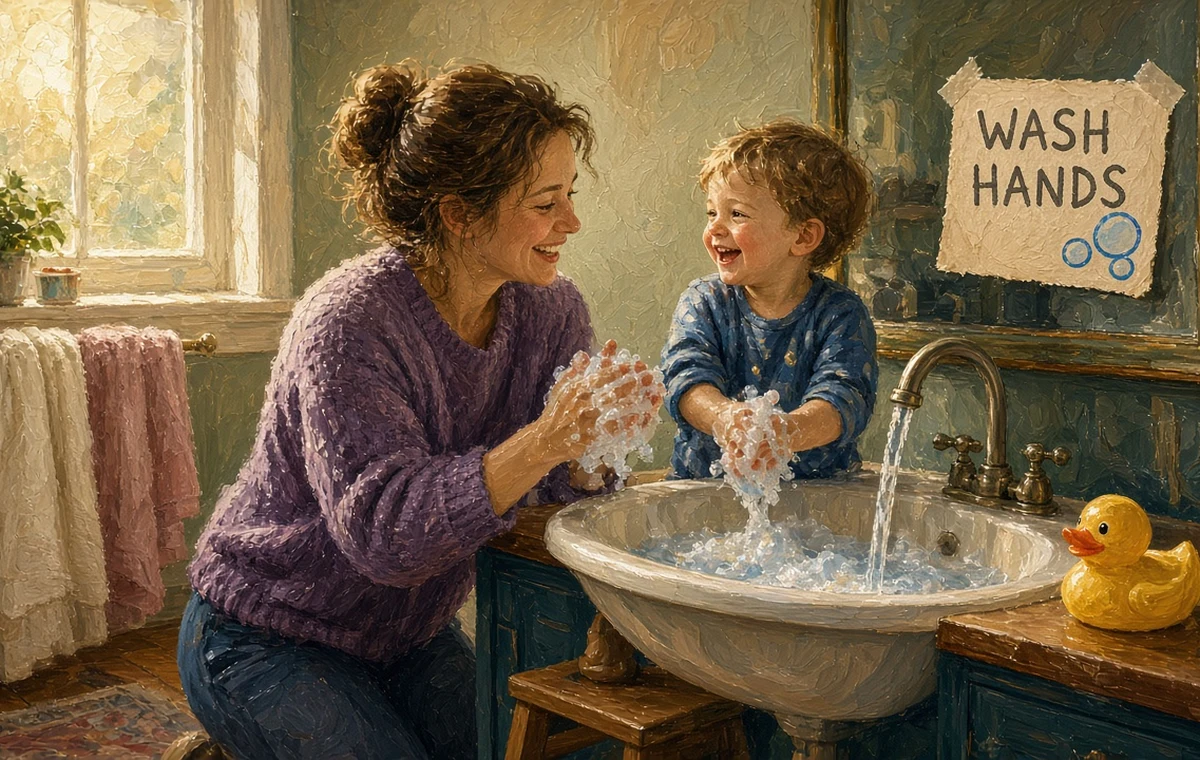
Young children are endlessly curious but still lack coordination and the ability to judge danger, which makes them vulnerable to accidents and infections. Adults therefore have two jobs at once: making the environment safe, and gradually teaching children ways to keep themselves safe.

What should be taught at each age?
The general direction is simple. In infancy adults manage the environment; as children grow, more of the doing passes to the child. The table below gives the typical focus for each stage.
| Stage | Main content |
|---|---|
| Infancy (0–1) | Back to sleep, preventing choking and falls, feeding and hygiene, immunisations |
| Toddlers (1–3) | Handwashing, starting toothbrushing, preventing swallowing and poisoning accidents, regular sleep |
| Preschool (3–5) | Eating a varied diet, road safety, respecting their own body, expressing feelings |
Safe sleep is a good example of adult-led education. The UK's Back to Sleep campaign of 1991 and later guidance from charities such as the Lullaby Trust advise placing babies on their back in a clear cot, because sleeping face down raises the risk of sudden infant death and suffocation.
Development varies a great deal between children of the same age, so use the table as a guide and adjust to what each child can actually do. Watching first and teaching second avoids both pushing too hard and holding a child back.
Skimming the section headings first makes a long guide much easier to map out. Try writing down one question of your own as you read.
How can health education be made effective?
Five techniques come up again and again in early years practice: repeat things through play, songs and picture books; model the behaviour yourself; explain in short, concrete steps; praise straight away; and attach habits to the same point in the daily routine.
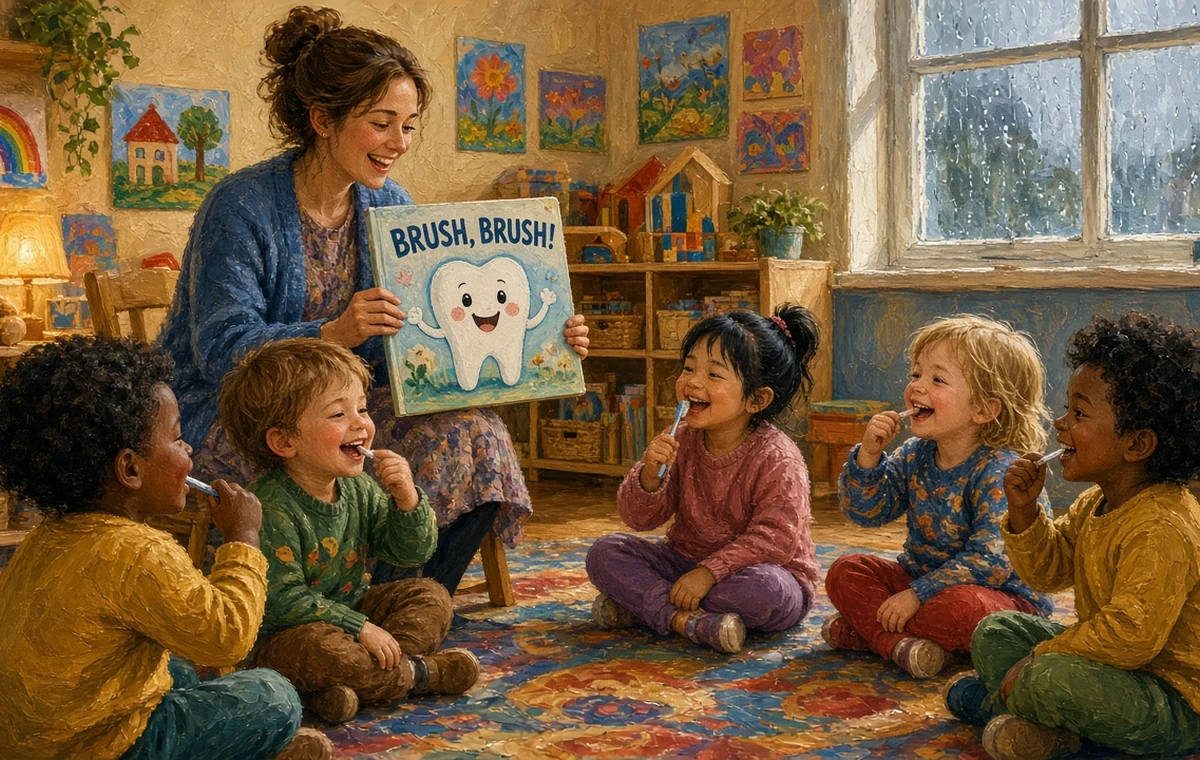
Albert Bandura showed that children learn by watching others and imitating them. Seen through Bandura's social learning theory, a parent or practitioner who visibly washes their hands and tries new vegetables teaches more than any explanation could.
Why concrete experience matters can be understood through Piaget's theory of cognitive development: in the preoperational stage children think through actions and images rather than abstract rules, so "germs" make sense once they can see glitter or paint spreading from hand to hand.
The key is to make children want to try for themselves. Education that relies on force rarely lasts, and a child who is told off for a bad attempt often learns to avoid the activity altogether.
What roles do parents and early years staff play?
Parents and practitioners carry different parts of the load, but the most important thing they share is consistency. When home and setting teach different rules, children get confused.
| Who | Role |
|---|---|
| Parents | Building daily habits at home, a safe environment, keeping up with health checks and immunisations |
| Early years practitioners | Health education within the daily routine, hygiene and safety, spotting health problems early |
| Shared | Consistent rules, sharing information, being role models |
Daily diaries, home–nursery apps and short conversations at pick-up help align things such as how to wash hands or how to handle fussy eating. In England, the Early Years Foundation Stage includes managing self-care within personal, social and emotional development, so nurseries are expected to work on these habits deliberately.
Practitioners also pass accurate health information to parents, so they need to keep up with current guidance on infection control and safety rather than relying on habits from years ago.
How do handwashing and toothbrushing become habits?
Of everything in early years health education, handwashing and toothbrushing are repeated most often and for longest. These two small routines are the foundation of infection control and oral health, but children rarely act on "go and wash your hands" alone.
Break the task into small steps they can feel. Korea's disease control agency teaches six steps over at least 30 seconds: palms, backs of hands, between the fingers, fingers interlocked, thumbs, and under the nails. The NHS and the US CDC advise at least 20 seconds. Either way, turning it into a short song that ends when the bubbles are done gives children a sense of time without counting.
Link handwashing to moments already in the day: coming in from outdoor play, after the toilet, before meals and snacks, after blowing their nose or coughing into their hands, and after touching animals. In a nursery, a picture timetable by the sink lets children who cannot read predict what comes next.
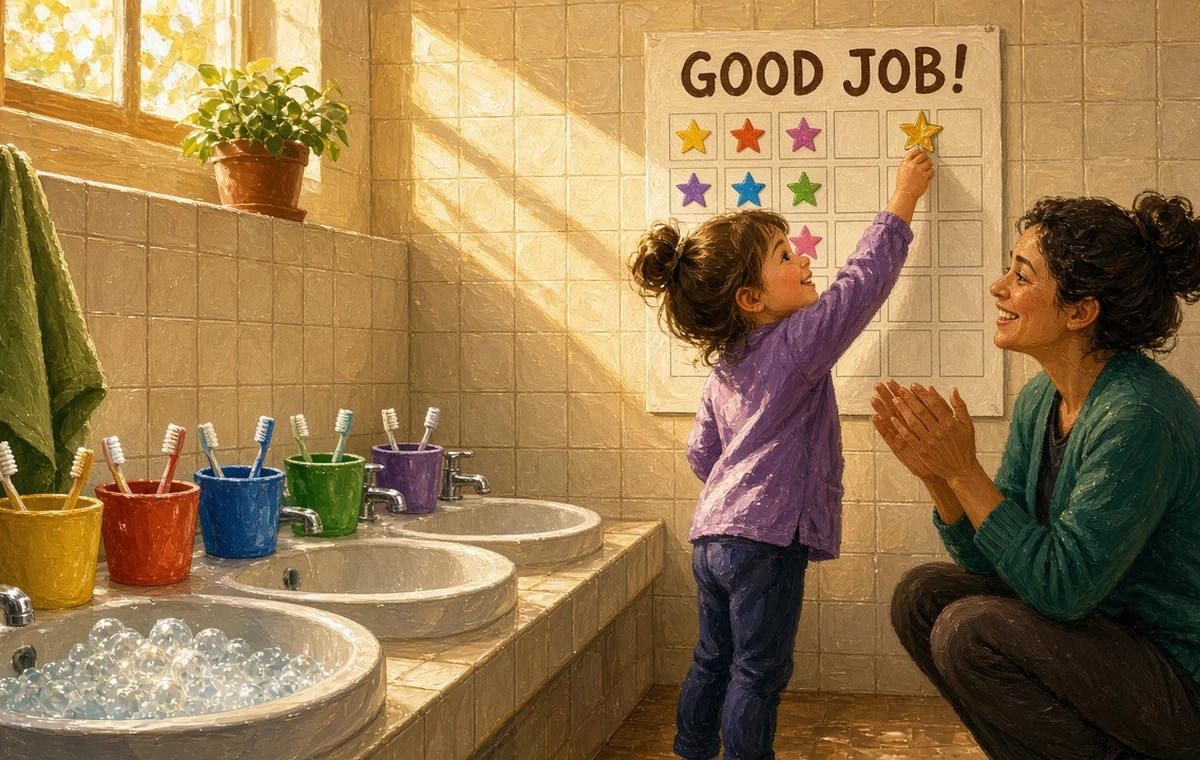
Toothbrushing starts when the first tooth appears. NHS guidance is a smear of toothpaste containing at least 1,000 ppm fluoride for children under three, and a pea-sized amount of 1,350–1,500 ppm toothpaste from three to six; US dental bodies give similar "rice grain" and "pea-sized" advice. Let children have a go first, then finish the job yourself, because back teeth and the gumline are hard for small hands to reach. In Scotland, the Childsmile programme has made supervised toothbrushing a normal part of the nursery day.
What can you expect at each age?
Children develop at different speeds, but a rough guide helps avoid both unrealistic expectations and needless worry.
| Age | What the child can do | How adults help |
|---|---|---|
| Around the first birthday | Get used to having the mouth cleaned | Wipe gums and first teeth with gauze or a baby brush |
| 1–2 years | Hold hands out, copy rubbing bubbles | Wash together while saying the steps aloud |
| 3–4 years | Try brushing alone, follow handwashing steps | Finish brushing, check under the nails |
| 5–6 years | Do most handwashing steps alone | Praise and a sticker chart to lock in the habit |
Avoid bottles or cups of milk or juice at bedtime, keep each child's toothbrush separate and upright to dry, use individual towels or paper towels, and practise catching coughs in the elbow. If a child refuses to brush, start with brushing a teddy's teeth or a "roar like a lion" game in the mirror rather than forcing their mouth open.
How can routine health checks be used?
Many countries build health education into their child health checks, and the details are worth knowing for comparison in assignments.
Also on CampusDown Law Up: My Landlord Won't Fix the Mold in My Apartment. What Can I Do?
In South Korea, the National Health Insurance Service offers eight infant health check-ups between 14 days and 71 months, covering growth, development, vision, hearing and age-appropriate health education. Separate dental check-ups are offered four times, at 18–29, 30–41, 42–53 and 54–65 months; many parents miss them because they do not always line up with the general check-ups. In England, the Healthy Child Programme has health visitors review children at set points, including the new birth visit, six to eight weeks, around one year and two to two-and-a-half years. In the US, the American Academy of Pediatrics' Bright Futures schedule sets out regular well-child visits.
How do check-ups feed back into daily life?
If a check finds a high risk of tooth decay, look first at how often your child snacks: grazing on sweet food little and often is worse for teeth than eating it at once, because the mouth stays acidic for longer. Fixed snack times and a drink of water afterwards make a real difference.
Advice from check-ups on safety, nutrition and sleep works best when home and nursery act on it together. The heart of early years health education is turning small daily habits into happy experiences, bridged by praise and repetition until children can do them alone.
Compiled by the CampusDown editorial team from a Korean article on age-specific health education for young children, adapted with public information on Korea's National Health Insurance Service infant check-ups, the NHS and Healthy Child Programme in England, Childsmile in Scotland and AAP Bright Futures in the US. Sources: Bandura, A. (1977), Social Learning Theory, Prentice Hall; NHS and national guidance on safe sleep, handwashing and fluoride toothpaste. Reviewed November 2026. This is general information, not medical advice.
FAQ
Why should babies sleep on their backs?
Sleeping face down raises the risk of sudden infant death and suffocation, so babies should be placed on their back in a clear cot.
When should I start brushing my child's teeth?
As soon as the first tooth appears, using a soft baby brush or gauze and a smear of fluoride toothpaste.
How much toothpaste should young children use?
NHS guidance is a smear for under-threes and a pea-sized amount from three to six, with the fluoride level shown on the tube.
How long should children wash their hands?
At least 20 seconds with soap and running water; Korea's guidance teaches six steps over at least 30 seconds.
How many dental check-ups do Korean children get?
Four national dental check-ups, at 18–29, 30–41, 42–53 and 54–65 months, separate from the eight general check-ups.