
Dear My Friends Drama Analysis: Ageing, Dementia, Illness, Late-Life Friendship and Elderly Welfare
- Dear My Friends follows a group of friends in their seventies and the realities of growing old.
- Dementia, cancer, marital conflict and loneliness are each carried by a different character.
- In an elderly welfare assignment, match each character's needs to the support services that could help.
Contents
- What is the drama about?
- Which problems does each character carry?
- What role does the family play?
- What to read from a welfare perspective
- Translating the case to the UK
- How to structure your assignment
- Avoid writing older people as helpless
- The carers behind the story
- Jung-ah and the right to leave
- Nan-hee and talking about the end of life
- Choong-nam, learning and late-life purpose
- FAQ
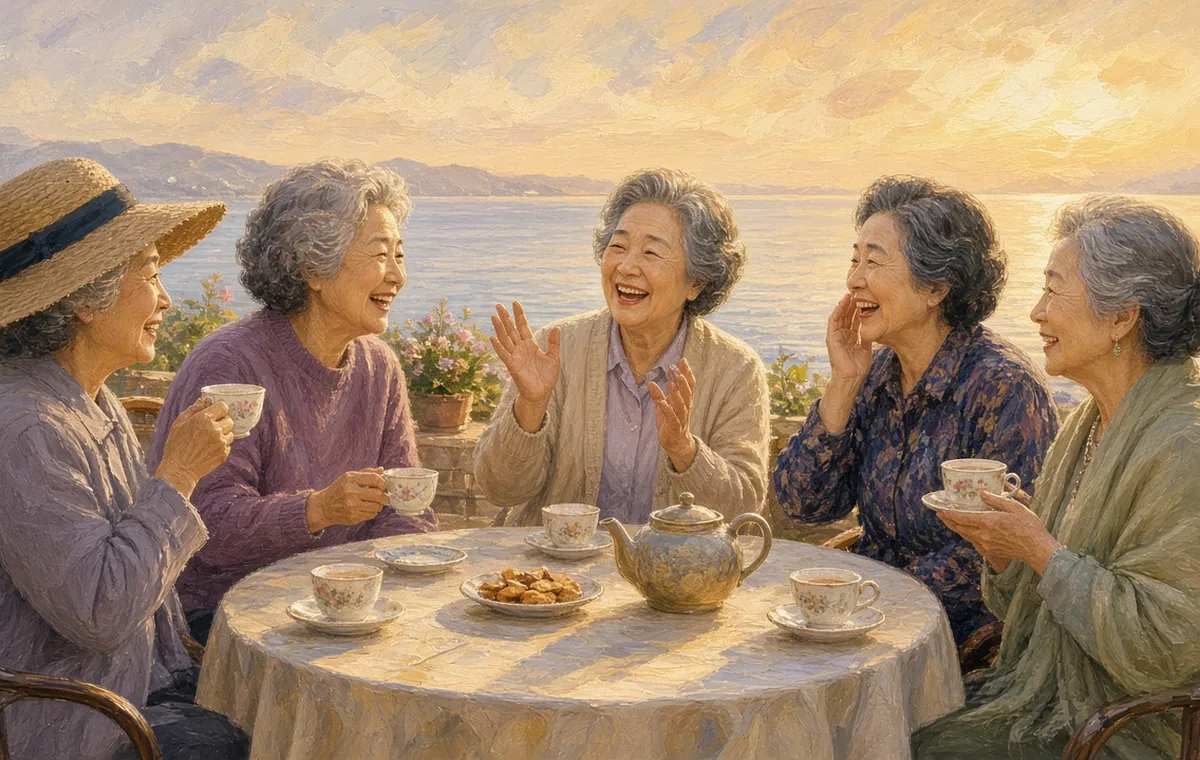
Dear My Friends is a 2016 tvN drama written by Noh Hee-kyung, starring a cast of veteran Korean actors including Kim Hye-ja, Na Moon-hee, Youn Yuh-jung, Go Doo-shim and Park Won-sook. Seen through the eyes of Wan, a would-be novelist, it follows her mother and her mother's friends without either romanticising or belittling old age. Many viewers outside Korea came to it after Youn Yuh-jung won the Academy Award for Best Supporting Actress for Minari in 2021, and it has since become a popular case text in social work and gerontology courses.
What is the drama about?
Park Wan is asked to turn the lives of her mother Nan-hee and her 'aunties' into a novel. Taking notes on people she once dismissed as stubborn and old-fashioned, she gradually learns what lies behind their habits. The story weaves friendship, family, love and loss across several characters, and its real strength is that it refuses to treat older people as one group. Each of them has a different temperament, a different marriage and a different bank balance.
Student money tip from CampusDown Life UpHow to Find Unclaimed Money in Your Name — How to find unclaimed money in your name for free: official state databases via NAUPA and MissingMoney.com, federal searches like Treasury…
Wan narrates, so the series is also about an adult daughter coming to understand her parents' generation. That makes it useful for discussing ageing within relationships between generations rather than as a problem belonging only to older people.

Which problems does each character carry?
| Character | Main issue | Welfare angle |
|---|---|---|
| Hee-ja | Widowed, living alone, early signs of dementia | Early diagnosis, safety checks for people living alone |
| Jung-ah | Decades of conflict with her authoritarian husband Suk-kyun, longing for a life of her own | Late-life divorce, self-determination, hidden emotional abuse |
| Nan-hee | A cancer diagnosis she struggles to tell her family about | Illness disclosure, family communication, end-of-life planning |
| Choong-nam | Never married, regrets the schooling she missed | Loneliness, lifelong learning, social participation |
Looking at illness and care together with public systems such as long-term care makes an analysis far more solid. The table is a starting point; your job is to explain why each problem arises and who is responsible for responding to it.
Skimming the section headings first makes a long guide much easier to map out. Try writing down one question of your own as you read.
What role does the family play?
The adult children love their parents, but busy lives mean they notice changes late. The arguments among Hee-ja's children over her dementia show what happens when the whole burden of care falls on a family with no outside support: guilt, blame and exhaustion. The friends, by contrast, check on one another daily and act as an informal support network. These scenes illustrate a well-established finding in gerontology, that social ties in later life are closely linked to health and quality of life, a theme also explored in successful ageing and activity theory.
What to read from a welfare perspective
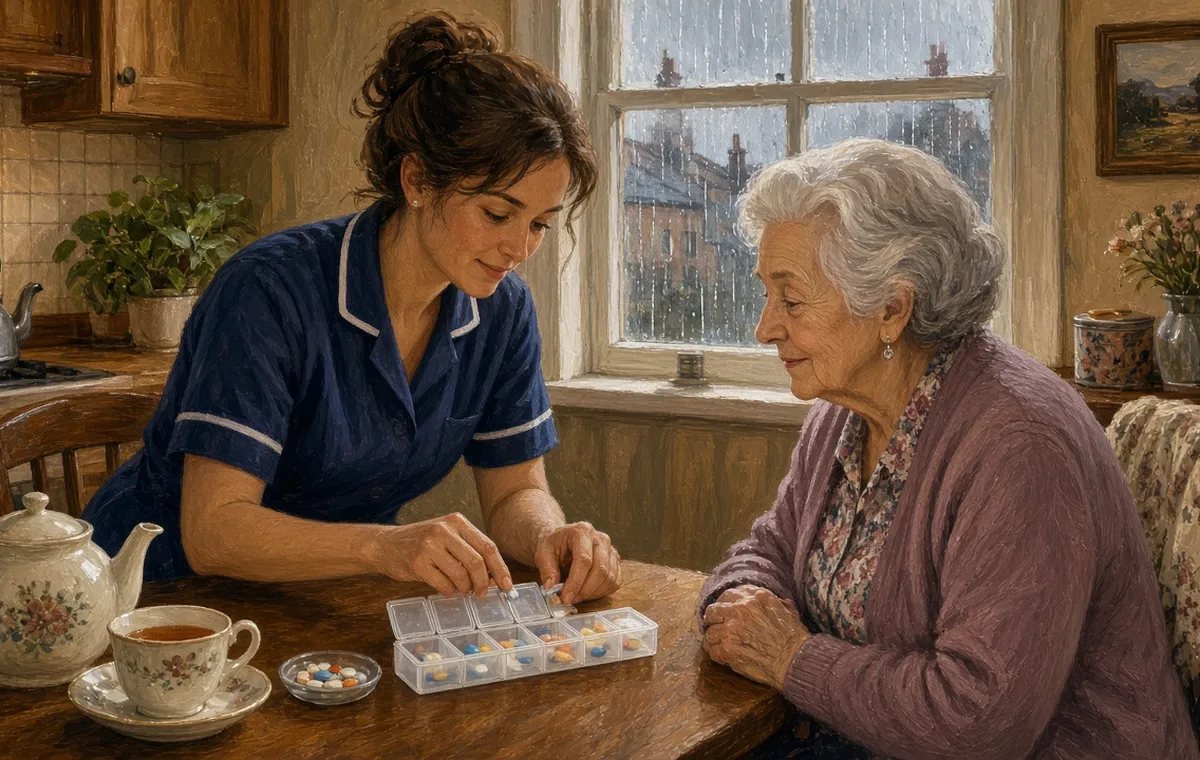
The drama touches evenly on early detection of dementia, safety checks for people living alone, prevention of elder abuse, late-life divorce and self-realisation in old age. Linking each theme to a real service is what gives an assignment depth.
In Korea, the obvious links are long-term care insurance, introduced in July 2008, which funds home help, bathing and nursing visits after an eligibility assessment; dementia support centres, expanded nationwide from 2017, which offer free screening and family counselling; and customised elderly care services, which include regular check-in calls and visits for people living alone. Respite programmes for family carers are also worth naming when you discuss Hee-ja's children.
Translating the case to the UK
If you study in the UK, set the Korean system next to the one you will work in. Under the Care Act 2014, anyone who appears to need care and support can ask the local council for a needs assessment, and carers have their own right to a carer's assessment. A GP can refer someone like Hee-ja to a memory clinic for diagnosis and follow-up. Loneliness also has a policy history here: in January 2018 the UK government appointed a minister with responsibility for loneliness, an unusual step that shows how seriously isolation in later life is now taken.
A short comparison table, Korean service on one side and its nearest UK equivalent on the other, is a neat way to show you understand both systems without padding your word count.
How to structure your assignment
Choose two or three characters and work through problem, need, available resources and intervention in that order. That keeps both the length and the logic under control. For Hee-ja, for example, the problem is cognitive decline while living alone, the need is safety and an early diagnosis, the resources are her children, her friends and memory services, and the intervention combines a formal assessment with a care plan that keeps her friends involved.
Keep quotations from the dialogue short and explain what a scene means in your own words; markers reward interpretation, not transcription. End with a paragraph on how your own view of old age shifted while watching.
Avoid writing older people as helpless
Be careful not to portray the characters only as passive recipients of care. The scenes in which the friends set off on a road trip together, or start chasing new dreams, show that growth and choice continue in later life. That connects directly to the practice principles of respecting older people's rights and their self-determination, which should run through your recommendations.
CampusDown keeps an introduction to elderly welfare in its social work materials, and the same problem, need, resource, intervention framework works for almost any case-based gerontology task.
The carers behind the story
Hee-ja's children are what UK policy calls unpaid carers: family members who look after someone without being paid for it. The drama shows their exhaustion honestly, from missed work to arguments over who should move in with their mother. In England, the Care Act 2014 gives carers a right to their own assessment, separate from the person they look after, and the outcome can include respite breaks, practical help or a direct payment. Linking the siblings' quarrels to this right lets you argue that their conflict is partly a failure of support, not only of family love.
Jung-ah and the right to leave
Jung-ah's decades with Suk-kyun are one of the drama's sharpest threads. He controls the money, dismisses her wishes and expects her to serve him, and when she finally talks about divorce her friends and children do not all take her side. For a welfare assignment this storyline opens up two themes. The first is that coercive and emotional abuse can exist in long marriages without physical violence, and English safeguarding duties under the Care Act apply to adults at risk regardless of age. The second is self-determination: Jung-ah wants to spend her remaining years on her own terms, and good practice supports that choice rather than steering her back towards keeping the peace.
Nan-hee and talking about the end of life
Nan-hee hides her cancer diagnosis because she fears becoming a burden, and her daughter Wan finds out late. Scenes like this are a natural way into advance care planning, the process of discussing and recording what a person wants if they become seriously ill. In England that can include an advance statement of wishes and a Lasting Power of Attorney for health and welfare. You can argue that earlier, supported conversations would have given Nan-hee more control and spared the family some of the shock.
Choong-nam, learning and late-life purpose
Choong-nam never married and gave up her own schooling for her family, and her regret about missed education runs through the series. Rather than reading her only as lonely, treat her as someone with unmet aspirations. Adult learning, volunteering and community groups are all routes to the social participation that activity theory associates with wellbeing, and her story is a reminder that needs in later life are not only about care.
Student money tip on CampusDown Life Up: How to Find Unclaimed Money in Your Name.
Reviewed by the CampusDown editorial team, November 2026. Sources: tvN, Dear My Friends (2016, written by Noh Hee-kyung); National Health Insurance Service, long-term care insurance guidance; Care Act 2014 (UK); UK Government, loneliness strategy (2018).
FAQ
Who wrote Dear My Friends?
It was written by Noh Hee-kyung and aired on tvN in South Korea in 2016.
Which later-life issues does the drama cover?
Dementia, cancer, an unequal marriage, loneliness, regret over missed education and the strain of family caregiving.
Which services can I link to the characters?
In Korea, long-term care insurance, dementia support centres and customised elderly care; in the UK, a Care Act needs assessment, a GP referral to a memory clinic and carers' support.
How should I structure the assignment?
Pick two or three characters and go through problem, need, available resources and intervention for each, then close with how your own view of old age changed.