
Parabens, Phenoxyethanol, Mineral Oil and Fragrance: How to Read a Skincare Label Under FDA, MoCRA and EU/UK Rules
- Skincare aims to cleanse, rebalance and protect, and every bottle mixes water, oils, emulsifiers, humectants, antioxidants and preservatives.
- Parabens and phenoxyethanol are preservatives allowed at set limits, such as 0.8% mixed parabens and 1% phenoxyethanol in the EU and UK.
- Refined mineral oil is a non-toxic occlusive moisturiser, while fragrance is a leading cause of cosmetic allergy.
Contents
Parabens and phenoxyethanol are preservatives, mineral oil is a refined occlusive moisturiser, and "fragrance" is a catch-all for scent blends. All four are legal in the US, the UK and the EU at controlled levels, and none of them is a red flag on its own. What matters is how much is used, where the product goes on your body, and whether your own skin reacts. This guide shows you how to read the ingredient list on the back of a toner, lotion or cream, why "paraben-free" became a marketing badge, and what regulators and dermatologists actually say.
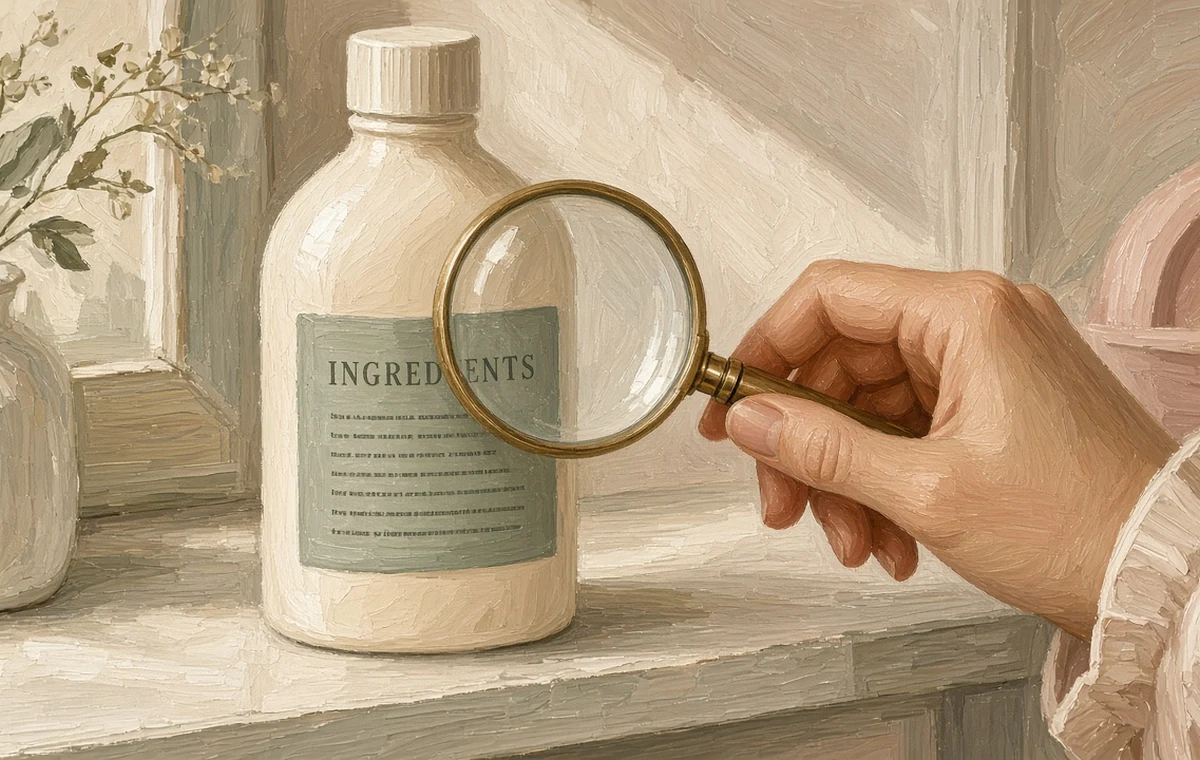
Think of a skincare bottle as a small recipe of 20 to 50 raw materials. Water and humectants carry moisture, oils and waxes seal it in, emulsifiers keep oil and water from separating, and preservatives stop bacteria and mould from moving in once you open the lid and dip your fingers in.
What do skincare basics actually do, and what is inside them?
US law defines cosmetics as products applied to the body "for cleansing, beautifying, promoting attractiveness, or altering the appearance". The core job of everyday skincare is simpler: cleanse, rebalance and protect. Your skin barrier depends on a balance of sebum, natural moisturising factor (NMF) and water, and pollution, harsh soaps, central heating and age all knock that balance off. Toners, lotions, serums, creams and sunscreen try to restore it.
Student money tip from CampusDown Life UpHow to Find Unclaimed Money in Your Name — How to find unclaimed money in your name for free: official state databases via NAUPA and MissingMoney.com, federal searches like Treasury…
| Family | Typical INCI names | What it does |
|---|---|---|
| Water phase | Aqua (Water), Alcohol Denat., Glycerin | Base solvent, hydration |
| Oil phase | Paraffinum Liquidum (Mineral Oil), Petrolatum, Squalane, plant oils, waxes | Softens skin and reduces water loss |
| Emulsifiers and surfactants | Cetearyl Alcohol, Polysorbate 20, Sodium Laureth Sulfate | Mix oil and water, or lift away dirt |
| Humectants | Butylene Glycol, Sodium Hyaluronate | Pull water into the outer skin layer |
| Antioxidants | Tocopherol (vitamin E), BHT | Stop oils from going rancid |
| Preservatives | Methylparaben, Phenoxyethanol, Ethylhexylglycerin | Prevent bacterial and fungal growth |
In both the US and the EU, ingredients above 1 percent must be listed in descending order of concentration, and anything at 1 percent or less can appear in any order at the end. That is why preservatives and fragrance usually sit near the bottom: they work at tiny doses. A quick rule of thumb is that the first five names make up most of the bottle.

Why did "paraben-free" become a selling point?
Parabens are esters of 4-hydroxybenzoic acid and have been used in food, medicines and cosmetics for about a century because they are cheap, stable and effective against both bacteria and moulds. Their reputation collapsed after a widely publicised 2004 study detected parabens in breast tumour tissue. The study did not show that parabens caused cancer, and it had no healthy-tissue comparison, but the headline stuck and "paraben-free" became one of the most successful labels in beauty marketing.
Regulators responded with evidence rather than bans across the board. The EU's Scientific Committee on Consumer Safety (SCCS) reviewed the data, and the UK kept the same rules after Brexit:
| Ingredient | Maximum in a finished product | Extra condition |
|---|---|---|
| Methylparaben, ethylparaben | 0.4% each, 0.8% for mixed esters (as acid) | None beyond the limit |
| Propylparaben, butylparaben | 0.14% combined | Not in leave-on nappy-area products for children under three |
| Isopropyl-, isobutyl-, phenyl-, benzyl-, pentylparaben | Banned since 2014 | Too little safety data |
| Phenoxyethanol | 1.0% | SCCS (2016) judged 1% safe for all consumers, including children |
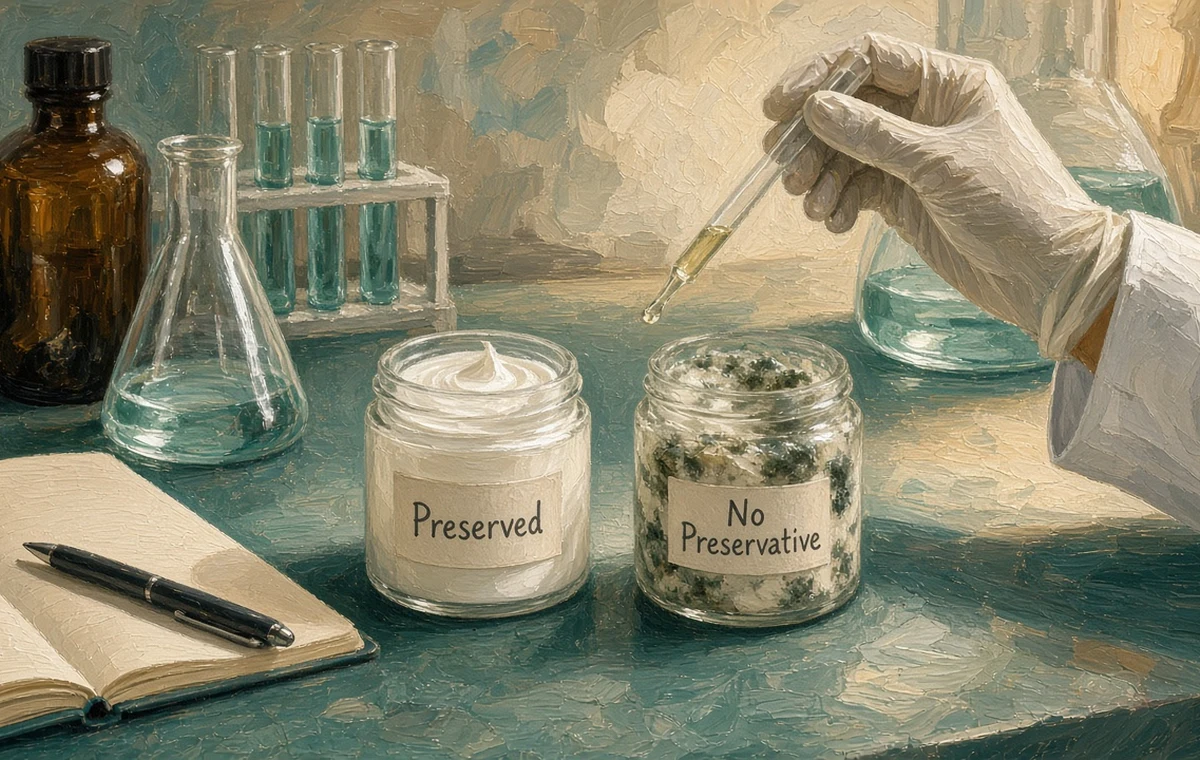
In the United States the FDA does not set a numerical paraben limit, but the Modernization of Cosmetics Regulation Act of 2022 (MoCRA) now requires companies to register facilities, list products, report serious adverse events and keep evidence that each product is safe. The industry-funded Cosmetic Ingredient Review panel has repeatedly concluded that parabens are safe at current use levels. Phenoxyethanol, a glycol ether, became the most common replacement. It is a mild irritant at high doses, which is why the 1 percent cap exists, but at normal concentrations allergic reactions are rare.
The trade-off is the part marketing rarely mentions: removing one preservative means adding another, or accepting a shorter shelf life. A water-based cream with no effective preservative is a growth medium, and contaminated cosmetics have caused real infections. "Preservative-free" is only safe when the packaging (airless pumps, single-dose capsules) does the protecting instead.
Skimming the section headings first makes a long guide much easier to map out. Try writing down one question of your own as you read.
Is mineral oil bad for your skin?
Mineral oil, listed as Paraffinum Liquidum, is a highly purified mixture of hydrocarbons from petroleum. Cosmetic and pharmaceutical grades are refined to USP or European Pharmacopoeia standards, which remove the polycyclic aromatic hydrocarbons that make crude or lightly treated oils hazardous. The International Agency for Research on Cancer places untreated mineral oils in its highest-risk group but highly refined grades in Group 3, "not classifiable", which is the category your cleansing oil or baby oil falls into.
The popular claim that mineral oil "stops skin breathing" misunderstands how skin works: skin gets its oxygen from the bloodstream, not the air. Mineral oil and petrolatum do form an occlusive film that slows water loss, and that is exactly why dermatologists recommend petroleum jelly for eczema-prone skin and post-procedure healing. Studies of cosmetic-grade mineral oil rate it as non-comedogenic or very low, though a heavy, rich cream can still feel too much for oily, acne-prone faces. That is a texture choice, not a toxicity problem.
The fair summary: purified mineral oil is stable, cheap, rarely allergenic and good at locking in moisture. If you dislike how it feels, swap it for squalane or a plant oil, but do not swap it out of fear.
Where does fragrance come from, and why can it irritate?
- Plant-derived: essential oils pressed or distilled from flowers, fruit peel, leaves, bark and roots, such as lavender, bergamot and rose.
- Animal-derived: historic materials such as musk and civet, now almost entirely replaced by synthetics for cost and ethics.
- Synthetic and nature-identical: isolated single molecules (for example linalool separated from a plant oil) or molecules built from scratch in a lab.
Student money tip on CampusDown Life Up: How to Find Unclaimed Money in Your Name.
On a US label all of this can hide behind the single word "Fragrance" or "Parfum", because scent formulas are treated as trade secrets. Fragrance is one of the most common causes of cosmetic contact allergy, and "natural" essential oils are not gentler: lavender and citrus oils contain the same allergens as synthetics. The EU requires listed allergens such as limonene, linalool and geraniol to be named once they pass 0.001 percent in leave-on products, and a 2023 regulation expands that list to around 80 substances. MoCRA directs the FDA to create a similar US allergen-labelling rule. If you live with eczema, look for "fragrance-free" rather than "unscented", which can mean a masking scent was added. Our guide to atopic dermatitis (eczema) explains why the damaged barrier reacts more easily.
EWG scores vs toxicologists: why the two lists disagree
Many American shoppers check apps that colour-code ingredients from green to red, such as the Environmental Working Group's Skin Deep database. These ratings are useful for spotting what is in a product, but they score hazard (what a chemical could do at some dose) rather than risk (what it does at the dose in your moisturiser). Toxicologists and bodies like the SCCS look at exposure: how much is applied, how often, how much passes the skin, and the safety margin. That is why a preservative can look red in an app and still be approved at 1 percent by regulators on both sides of the Atlantic.
| Claim on the front | What to check on the back |
|---|---|
| Paraben-free | Which preservative replaced it (phenoxyethanol, benzyl alcohol, isothiazolinones)? |
| Clean or non-toxic | Not a legal term in the US or UK; read the INCI list itself |
| Mineral-oil-free | Is there petrolatum, silicone or plant oil doing the same job? |
| Natural fragrance | Named allergens such as limonene, linalool, citral near the end |
| Dermatologist tested | Tested is not the same as approved; look for patch-test details |
Use the table as a two-minute checklist in the store aisle. The front label sells; the back label informs.
Quick self-check
- Can you spot where the 1 percent line probably falls in the ingredient list?
- Do you know which preservative your "paraben-free" cream uses instead?
- Is the product fragrance-free, or only unscented?
- Are you judging an ingredient by hazard alone, or by the dose and how you use it?
Compiled by the CampusDown editorial team from EU Cosmetics Regulation 1223/2009 Annex V, SCCS opinions, US FDA guidance on MoCRA and published dermatology reviews. Reviewed November 2026. General information only; see a dermatologist for persistent reactions.
FAQ
Are parabens banned in the US or the UK?
No. The UK and EU allow methyl- and ethylparaben up to 0.4% each and limit propyl- and butylparaben to 0.14% combined; five rarer parabens are banned. The US FDA has no numerical limit but regulates safety under MoCRA.
Is phenoxyethanol safer than parabens?
Neither is clearly safer. Both are approved preservatives. Phenoxyethanol is capped at 1% because it can irritate at high doses, and the EU's scientific committee judged that level safe for adults and children.
Does mineral oil clog pores or stop skin breathing?
Cosmetic-grade mineral oil is highly refined and rated non-comedogenic or very low in studies. Skin gets oxygen from the blood, so a moisturising film does not suffocate it.
What is the difference between fragrance-free and unscented?
Fragrance-free means no scent ingredients were added. Unscented can mean a masking fragrance was added to cover the smell of other ingredients.
Why is the ingredient list in a strange order at the end?
US and EU rules require descending order only for ingredients above 1%. Ingredients at 1% or less, often preservatives and fragrance, may be listed in any order.