
Can Dance Ease Shoulder Pain? Korean Traditional Dance, Ballet and a Shoulder-Focused Dance Movement Therapy Programme
- The shoulder is the body's most mobile joint, so its pain has many possible causes.
- Korean dance offers slow, curved, low-load arm work; ballet adds arm positions and posture correction.
- Sessions start with a 15-minute warm-up and end with a cool-down, with spacing and assistants for safety.
Contents
If your shoulder twinges every time you reach for a high shelf, are painkillers and heat packs the only answer? Dance movement therapy takes a different route: it borrows the movements of dance to loosen stiff muscles, rebuild strength and restore good posture, while adding music and expression that ordinary exercises lack. Based on a Korean presentation on shoulder-focused dance movement therapy, this guide explains how the shoulder works, what Korean traditional dance and ballet each offer, how a session is run, and how similar ideas show up in the United States and the United Kingdom.
Why does the shoulder hurt so easily?
The shoulder is a ball-and-socket joint wrapped in ligaments, muscles, nerves and fluid-filled sacs called bursae. The source calls it the only joint that can turn a full 360 degrees; more precisely, it is the most mobile joint in the body, since the hip is also a ball-and-socket joint, but it trades stability for that huge range of motion. Problems range from degenerative wear and the stiff, painful condition known as frozen shoulder to simple muscle tension.
Student money tip from CampusDown Life UpHow to Find Unclaimed Money in Your Name — How to find unclaimed money in your name for free: official state databases via NAUPA and MissingMoney.com, federal searches like Treasury…

Daily habits matter too. Hours at a computer in the same hunched position, or carrying a heavy bag on one shoulder, create muscle imbalances that can make pain worse. That is why shoulder care works best when it mixes contraction and relaxation evenly rather than repeating one movement, and why it pays to look at posture and habits alongside exercise.

What can dance do for a painful shoulder?
The presentation lists several benefits of dance-based movement for the shoulder:
- relaxing stiff shoulder muscles
- building strength
- reducing overload on the bursae and ligaments
- repeating contraction and relaxation in a way that may help protect the rotator cuff
- easing the stress that comes from feeling out of balance
Dance stands apart from ordinary calisthenics because it combines physical exercise with emotional expression. These benefits should be read as goals of the programme rather than proven outcomes; research on dance therapy for specific shoulder conditions is still limited, so it is best treated as a complement to medical care, not a replacement.
Skimming the section headings first makes a long guide much easier to map out. Try writing down one question of your own as you read.
How do Korean traditional dance and ballet differ?
| Item | Korean traditional dance | Ballet and modern dance |
|---|---|---|
| Main focus | Upper body | Mainly lower body, but the upper body is used too |
| Movement style | Curved, inward, slow and calm, centred on the lower abdomen and breath | Emphasis on hand gestures and arm positions |
| Benefit for the shoulder | Low load on muscles and joints; helps ease degenerative and joint pain | Posture correction, keeping the shoulder blades from rounding forward |
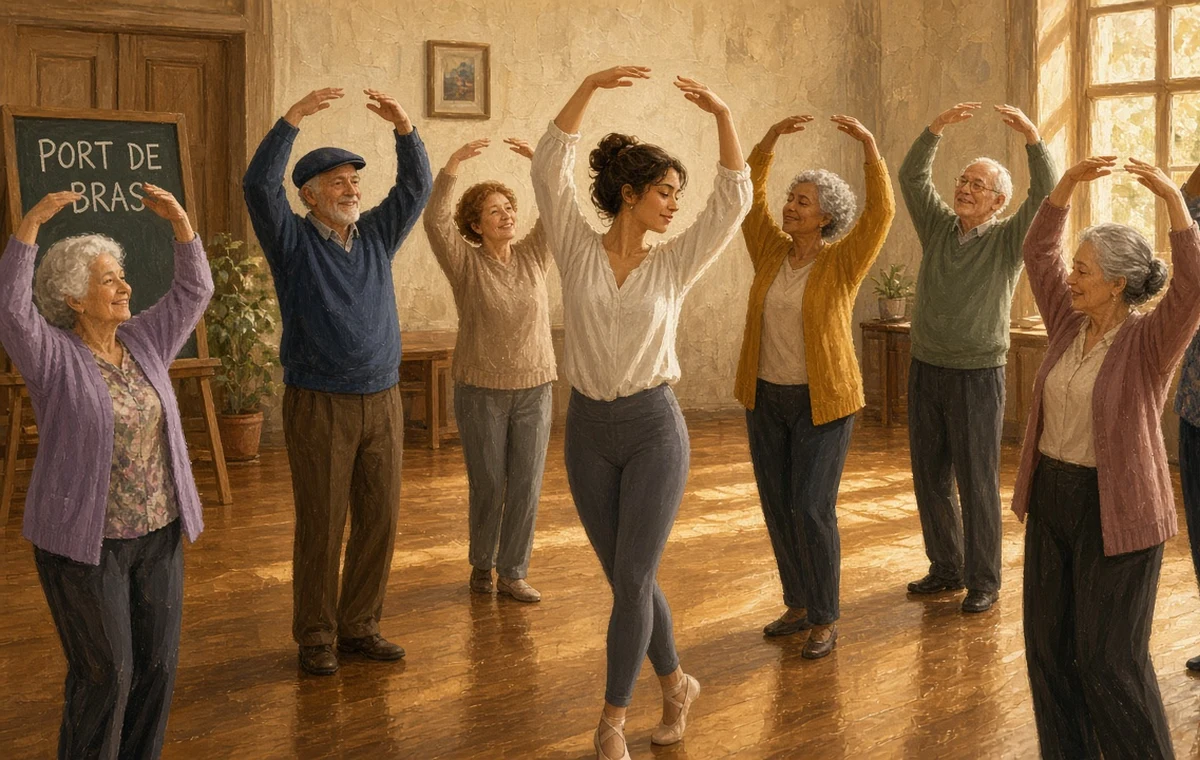
The key idea is that a programme can blend the strengths of both styles to suit each participant's pain level and preferences. Someone with a very stiff shoulder might begin with the slow arm-opening movements of Korean dance, then move on to ballet's port de bras once the pain eases, learning to hold the shoulder blades in a healthy position.
How is a session run?
A session starts by setting goals, expected effects and materials, then moves from warm-up through the main activity to a cool-down. The warm-up lasts about 15 minutes and includes a greeting, stretching and relaxation movements, so participants are fully warmed up before the main movements and the risk of injury drops.
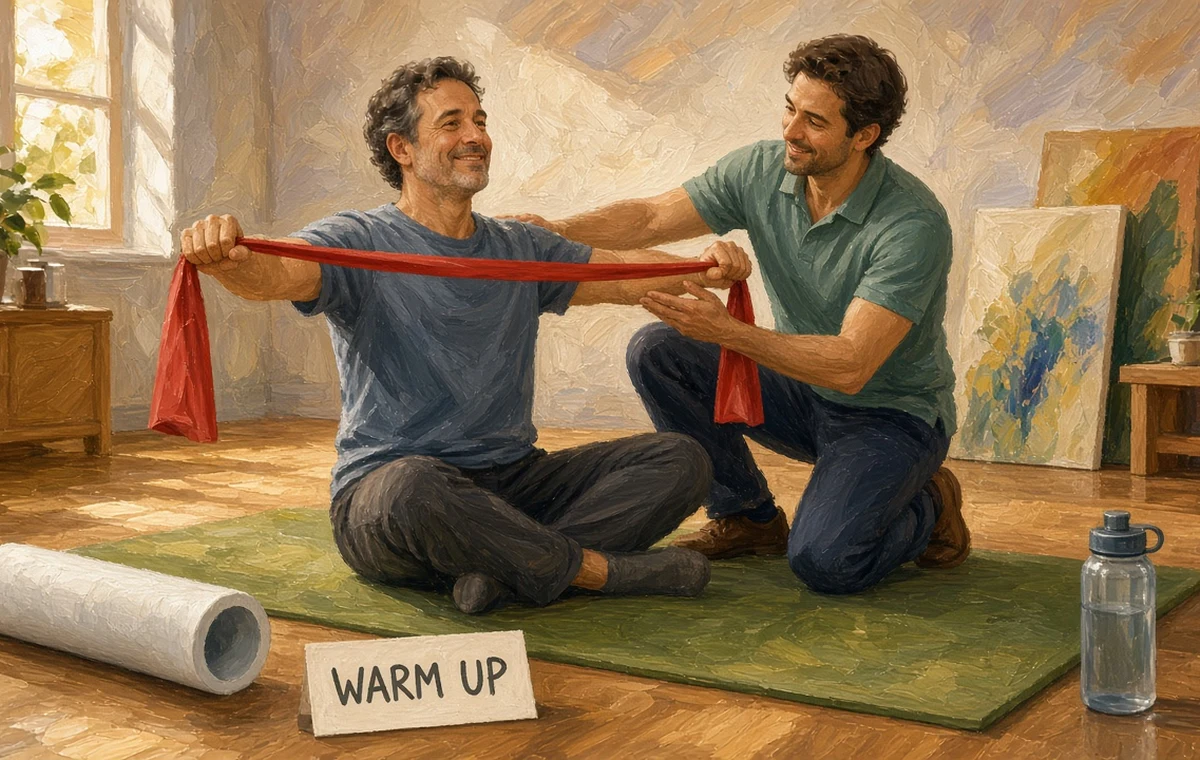
The main activity can repeat movements that use the joint evenly, such as slowly raising and lowering the arms or rolling the shoulders forward and back, in time with music. The cool-down returns to stretching to release the muscles. For safety, leave enough space so that people do not bump into one another with wide arm movements, place assistants in the room, and shrink the range of movement if pain increases. Guiding participants to repeat a movement within a comfortable range is safer than pushing them to finish it.
How do the US and UK approach dance and shoulder rehab?
United States
Dance therapy has a long professional history in the United States. The American Dance Therapy Association was founded in 1966, with the pioneer Marian Chace as its first president, and dance/movement therapists today work in hospitals, rehabilitation centres and senior programmes. For shoulder problems themselves, physical therapy remains the mainstream route, and rotator cuff injuries are well known among athletes who throw or swim. Many community and senior centres also run gentle dance or chair-based movement classes.
United Kingdom
In the UK, dance movement psychotherapy is represented by its own professional association, and the NHS advises that frozen shoulder can take a long time to improve and that gentle exercises, often guided by a physiotherapist, are a central part of treatment. Community schemes such as social prescribing can also refer people to local activity groups, including dance classes, to support both movement and wellbeing.
| Item | Korean dance movement therapy | US practice | UK practice |
|---|---|---|---|
| Main provider | Dance and exercise therapists | Physical therapists; dance/movement therapists | NHS physiotherapists; dance movement psychotherapists |
| Typical setting | Group programmes with music | Clinics, rehab centres, senior centres | Clinics and community groups |
| Emphasis | Relaxation, strength, posture and expression | Function and range of motion | Gradual exercise and wellbeing |
Seen side by side, the Korean programme is less a rival to physiotherapy than a friendlier doorway into the same principles of gradual, repeated and well-tolerated movement.
Which exercise concepts can strengthen the programme?
Five concepts from therapeutic exercise can deepen a presentation. Resistance bands add adjustable load to slow arm movements. Range-of-motion measurement with a goniometer, taken the same way before and after the programme, turns progress into numbers. Active-assisted exercise lets people with very stiff shoulders join in by using the other arm, a stick or a helper. Isometric exercise, such as gently pressing a palm into a wall, keeps muscles working without moving a painful joint, and participants should breathe normally while doing it. Thoracic mobility matters because a rounded upper back keeps the shoulder blades from moving freely; persistent weakness or pain may point to problems such as a rotator cuff tear that need medical assessment.
Student money tip on CampusDown Life Up: How to Find Unclaimed Money in Your Name.
| Concept | Core idea | Use in the programme |
|---|---|---|
| Resistance bands | Adjustable resistance | Step-by-step strength building |
| Range-of-motion measurement | Recording joint angles | Showing before-and-after change |
| Isometric exercise | Muscle contraction without joint movement | Keeping strength during painful periods |
| Thoracic mobility | Link between upper back and shoulder blades | Posture-correcting movements |
Anyone with real shoulder pain should talk to a doctor or physiotherapist before starting. Gentle movement can open a stiff shoulder, but it works best on top of a proper diagnosis.
FAQ
Who can benefit from dance movement therapy for the shoulder?
People with stiff shoulder muscles, joint pain or degenerative shoulder problems can use it as a complementary exercise alongside medical care.
Why is Korean traditional dance gentle on the shoulder?
Its curved, slow upper-body movements put little strain on muscles and joints.
How long is the warm-up?
In the presentation's example it lasts about 15 minutes, with a greeting, stretching and relaxation.
Is the shoulder really the only joint that rotates 360 degrees?
No. It is the most mobile joint, but the hip is also a ball-and-socket joint.
Should I see a professional first?
Yes. If you have ongoing pain, get a medical or physiotherapy assessment before starting.