
Carbon Monoxide Poisoning When Camping: Symptoms, First Aid and How to Stay Warm Safely
- Stoves, heaters and smouldering barbecues in a tent produce deadly, odourless carbon monoxide.
- Headache, dizziness and nausea in several people at once suggest CO: get into fresh air and call 999 or 911.
- Keep the stove outside, a battery CO alarm inside, and stay warm with a good bag and mat.
Contents
Never bring a stove, heater or barbecue into a tent, even one that seems to have gone out. Burning fuel in an enclosed space produces carbon monoxide (CO), an invisible, odourless gas that can kill sleeping campers before they wake. If someone in a tent has a headache, dizziness or nausea, get everyone into fresh air at once, switch off the heat source and call 999 in the UK or 911 in the US. Every year fire and rescue services repeat the same warning after deaths from disposable barbecues and gas heaters taken inside tents and awnings for warmth. This guide explains why CO is so dangerous, how to recognise poisoning, what to do in the first minutes and how to stay warm on a cold night without risking it, with a simple family rule: stove outside, alarm inside.
Why is carbon monoxide so dangerous in a tent?
When fuel such as gas, charcoal or wood burns without enough oxygen, combustion is incomplete and carbon monoxide is produced. A tent traps it, and the smaller and better sealed the tent, the faster the concentration rises.
Related on CampusDown Repair UpMy Carbon Monoxide Alarm Went Off at Night. Here's What You Do, in Order — Carbon monoxide alarm beeping in your apartment?
CO binds to haemoglobin, the oxygen-carrying protein in red blood cells, more than 200 times more strongly than oxygen does. As CO takes up those seats, the blood carries less and less oxygen, and the organs that need it most, the brain and the heart, are affected first.
The danger does not end when the flames die down. Smouldering charcoal and embers keep giving off CO for hours, which is why a barbecue that "has gone out" is one of the commonest causes of deaths in tents.
| Stage | What happens in the body | Why campers miss it |
|---|---|---|
| Low exposure | Mild headache, tiredness | Blamed on a long day or a drink |
| Moderate exposure | Dizziness, nausea, confusion, fast heartbeat | Mistaken for food poisoning or flu |
| High exposure | Collapse, loss of consciousness, death | Happens during sleep, with no warning |
Because CO has no smell, colour or taste, your senses give you no warning at all. Only an alarm can.

How do you recognise carbon monoxide poisoning?
- Headache, often described as dull or tight
- Dizziness and nausea or vomiting
- Drowsiness and confusion
- Palpitations or chest pain
- Shortness of breath and weakness
Two clues point strongly to CO rather than a bug: several people, or a person and a pet, feel ill at the same time, and symptoms ease when they step outside and return when they go back in.
Why can't you notice it while asleep?
Sleep removes your only defence, which is noticing that you feel unwell. A camper who dozes off beside a heater never gets the headache warning; the CO level simply rises until they lose consciousness. That is why alarms matter far more in tents and campervans than awake symptoms do.
Drinking alcohol makes this worse, because it deepens sleep and dulls the early signs that might otherwise wake someone.
Skimming the section headings first makes a long guide much easier to map out. Try writing down one question of your own as you read.
What should you do if you suspect CO poisoning?
- Get everyone out into fresh air immediately; rescuers should take a breath and hold it when going into the tent
- Turn off the stove or heater if it is safe, and open the tent fully
- Call 999 (UK) or 911 (US) and say you suspect carbon monoxide poisoning
- If someone is unresponsive and not breathing normally, start CPR
- Keep the person warm and still; do not let them go back to sleep in the tent
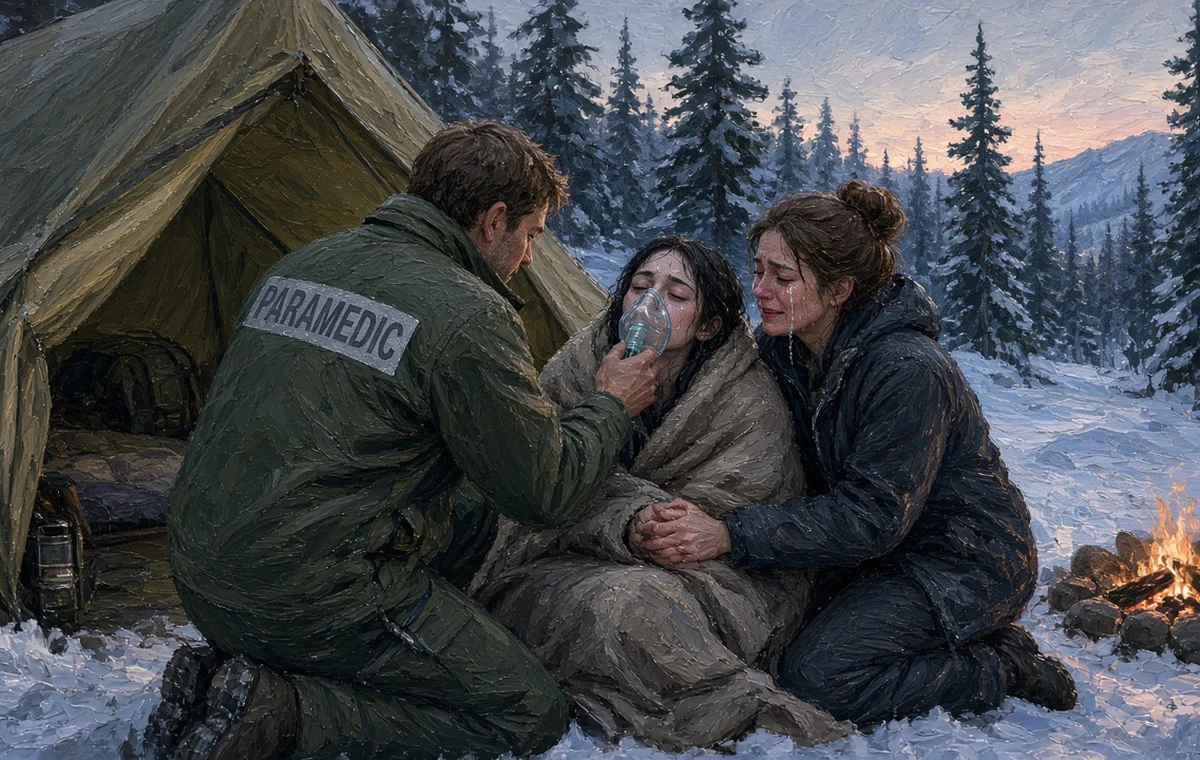
In hospital the main treatment is high-flow oxygen, which pushes CO off haemoglobin faster. Severe cases may be considered for hyperbaric oxygen in a pressurised chamber. Even people who feel better should be checked, because Weaver's 2009 review in the New England Journal of Medicine describes delayed neurological problems, such as memory loss, personality change or movement problems, appearing days to weeks after exposure.
How can you stay warm in a tent without the risk?
| Option | How it helps | Watch out for |
|---|---|---|
| Sleeping bag rated for the night's low | Keeps body heat in | Check the "comfort" rating, not the "extreme" one |
| Insulated mat (high R-value) | Stops the cold ground draining heat | Most heat loss is downward |
| Hot-water bottle | Safe heat source in the bag | Use a proper bottle and check the stopper |
| Electric heater on a hook-up pitch | No combustion, so no CO | Use a low-wattage model approved for tents |
| Warm meal and drink before bed | Fuels the body's own heat | Cook outside the tent |
If you camp in winter, the real enemy is the cold ground and damp air, so layers, a good mat and a dry sleeping bag do more than any heater. Getting this wrong carries its own danger, hypothermia, which is exactly why people are tempted to bring heat inside.
A battery-powered CO alarm, ideally one made for caravans and boats, should hang inside the tent at head height near where people sleep. Keep vents open both low and high so air can move, and never cook in the porch or awning with the door zipped shut.
What is the one family rule to remember?
"Stove outside, alarm inside." Teach it to everyone, including children, before the trip. It covers the two things that prevent almost every camping CO death: no combustion inside, and a device that stays awake when you do not.
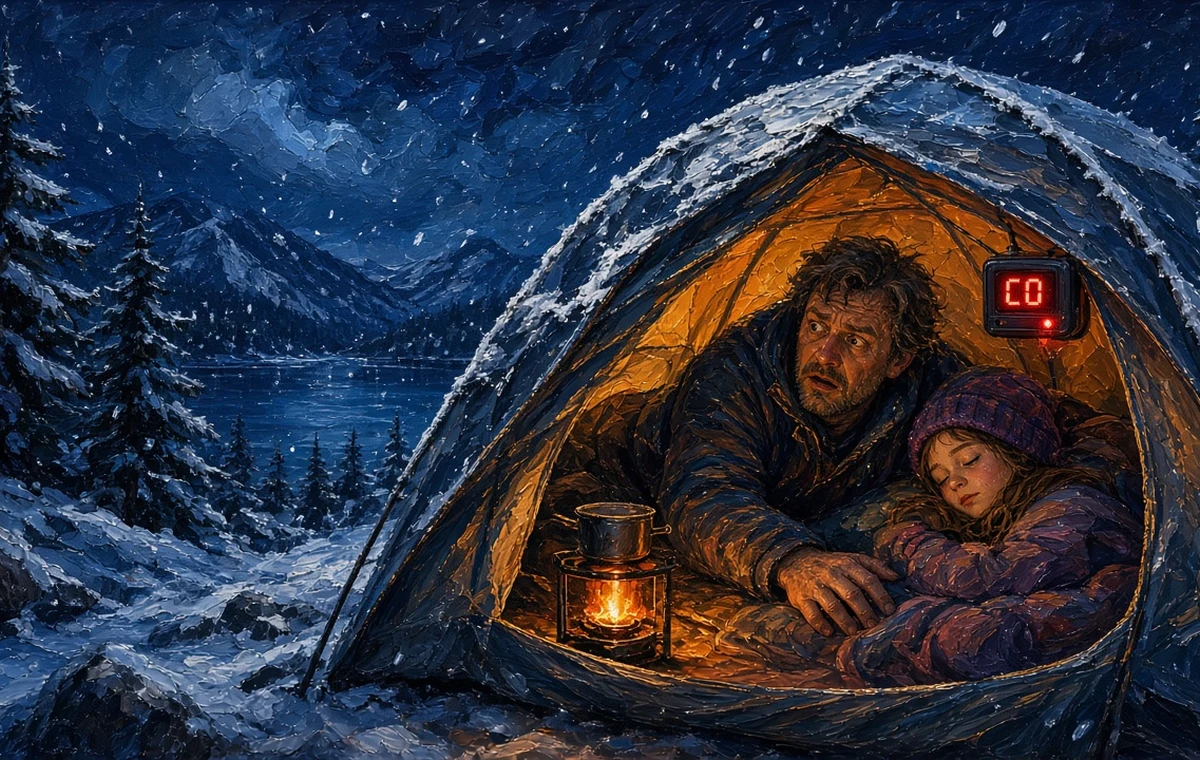
Check the alarm's battery before every trip, and test it at home by pressing the button so everyone knows what it sounds like.
What other campsite accidents should you prepare for?
| Risk | Prevention |
|---|---|
| Burns from stoves and fires | Keep children back, have water nearby, cook on stable ground |
| Drowning | Life jackets for children near water, never swim alone or after drinking |
| Trips over pegs and guy lines | Use reflective guy lines and carry a torch at night |
| Hypothermia | Dry layers, a hat, change out of wet clothes quickly |
Also on CampusDown Repair Up: My Carbon Monoxide Alarm Went Off at Night. Here's What You Do, in Order.
Pack a first-aid kit, and when you arrive find the warden's office or the nearest road an ambulance could reach. Saving the campsite's postcode or what3words location on your phone can save minutes in an emergency.
Compiled by the CampusDown editorial team from a Korean article on carbon monoxide poisoning while camping, adapted for UK and US readers with emergency numbers and standard fire-service advice on barbecues and heaters in tents. Source: Weaver, L. K. (2009). Carbon monoxide poisoning. New England Journal of Medicine, 360(12), 1217–1225. Reviewed November 2026. This is general safety information; in an emergency call 999 or 911.
FAQ
Is it safe if I leave the tent door slightly open?
No. A small gap does not clear CO reliably, so never run a stove, heater or barbecue inside.
Where should a CO alarm go in a tent?
Inside, near where people sleep at roughly head height, away from the door draught.
Can I sleep in my car with the engine running for heat?
It is dangerous, especially if snow or a wall blocks the exhaust. Switch the engine off and use warm bedding instead.
Is a disposable barbecue safe once it stops glowing?
No. Cooling charcoal keeps giving off CO for hours, so leave it outside well away from the tent.
Can CO poisoning have long-term effects?
Yes. Memory, mood or movement problems can appear days to weeks later, so get checked even if you feel better.