
What If a Nuclear Waste Site Came to Your Town? Korea's Buan Conflict, Yucca Mountain and the Community Practitioner's Role
- Community social work intervenes at community level to influence policy and to prevent and solve local problems.
- In 2003 Buan residents resisted a nuclear waste bid for over 20 months, while Gyeongju later chose a site by referendum in 2005.
- From Yucca Mountain to Cumbria, resident-led, consent-based decision-making is the key lesson for practitioners.
Contents
When a government proposes to put a radioactive waste site in a small town, community social work is about making sure local people can get trustworthy information, voice every side and take part in the decision itself, and South Korea's 2003 Buan protests and 2005 Gyeongju referendum show how the same kind of facility can produce bitter conflict or broad consent depending on how residents are treated. The lesson travels well, from Nevada's Yucca Mountain to the villages of west Cumbria.
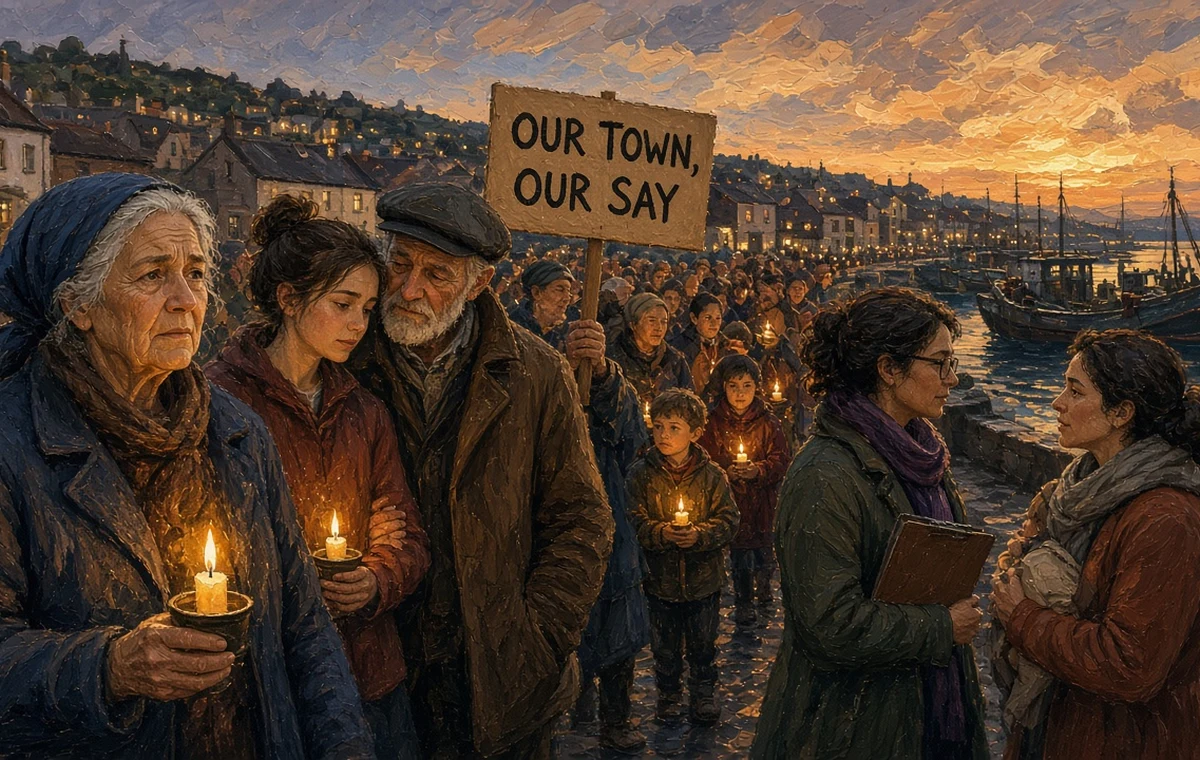
Imagine waking up to the news that your town has been chosen for a nuclear waste facility. Would you be for or against it? The Korean source behind this guide asks students to answer that question as future community practitioners. We keep its anchor case, the Buan conflict, and set it beside the best-known English-language parallels so the theory of community practice becomes concrete.
What is community social work?
In the Korean source, community welfare is a broad, institutional idea: professionals and volunteers intervening at the level of a whole community to influence policies and services, and to prevent and solve local problems. In English-speaking countries the closest terms are community social work, community development and community organizing. For a step-by-step view of how practitioners move from assessment to action and evaluation, see our wiki page on community practice process models.
Student money tip from CampusDown Life UpHow to Find Unclaimed Money in Your Name — How to find unclaimed money in your name for free: official state databases via NAUPA and MissingMoney.com, federal searches like Treasury…
Two traditions shape how practitioners think about a controversial facility. Saul Alinsky's community organizing, set out in Rules for Radicals (1971), focuses on helping ordinary residents build power to challenge decisions made over their heads. Asset-based community development, popularized by John Kretzmann and John McKnight in the 1990s, starts instead from what a community already has, such as local associations, skills and networks, and builds solutions from there. Both insist that residents are the main actors, not passive recipients.
Seen this way, siting a waste facility is not just a technical or administrative matter. It is a community welfare issue, because people's livelihoods, health worries and ways of deciding together are all at stake.

What happened in Buan in 2003?
In July 2003 the head of Buan County, a coastal farming and fishing area in southwest Korea, applied to host a radioactive waste facility, and the national government selected the area as the site. Many residents felt they had not been consulted. They demanded the bid be withdrawn and the county head step down, and for more than 20 months they held rallies, kept children home from school in protest and organized their own residents' vote, in which a large majority opposed the facility.
The conflict ended with the government abandoning the Buan plan and the county head declaring he would stop promoting it. It is still taught as a case of what happens when a location is decided without residents' consent: deep mistrust, divided families and a community that took years to heal.
Skimming the section headings first makes a long guide much easier to map out. Try writing down one question of your own as you read.
What are the arguments for and against?
The Korean source acknowledges that coal and nuclear power have long been far cheaper than renewables in Korea and have supported industrial competitiveness. But it also points to costs pushed onto future generations, from fine dust and greenhouse gases to long-lived radioactive waste, and to the fear of living near nuclear facilities.
| Side | Argument | Value underneath |
|---|---|---|
| Support | Waste already exists and must go somewhere safe; deep geological disposal is the international consensus approach | Responsibility and safety |
| Support | Host communities can receive jobs, investment and long-term funding | Economic development |
| Oppose | Risks to farming, fishing and tourism reputation | Livelihood |
| Oppose | One small area bears the burden of a national benefit | Fairness and justice |
| Oppose | Decisions made without genuine consent | Democracy and trust |
Because each side draws on different values, neither can win purely on facts. Admitting that is where real dialogue begins, and it is exactly the space community practitioners work in.
How did Yucca Mountain and Cumbria play out?
The United States offers the most famous example of a top-down approach. In 1987 Congress amended the Nuclear Waste Policy Act to make Yucca Mountain in Nevada the only site to be studied for the country's spent fuel, a move many Nevadans nicknamed the "Screw Nevada" bill. Nevada fought the plan for decades, Western Shoshone groups objected that the land was theirs under treaty, and although Congress approved the site in 2002 over the state's veto, federal funding for the licensing effort was halted around 2010. The country still has no permanent repository for spent fuel.
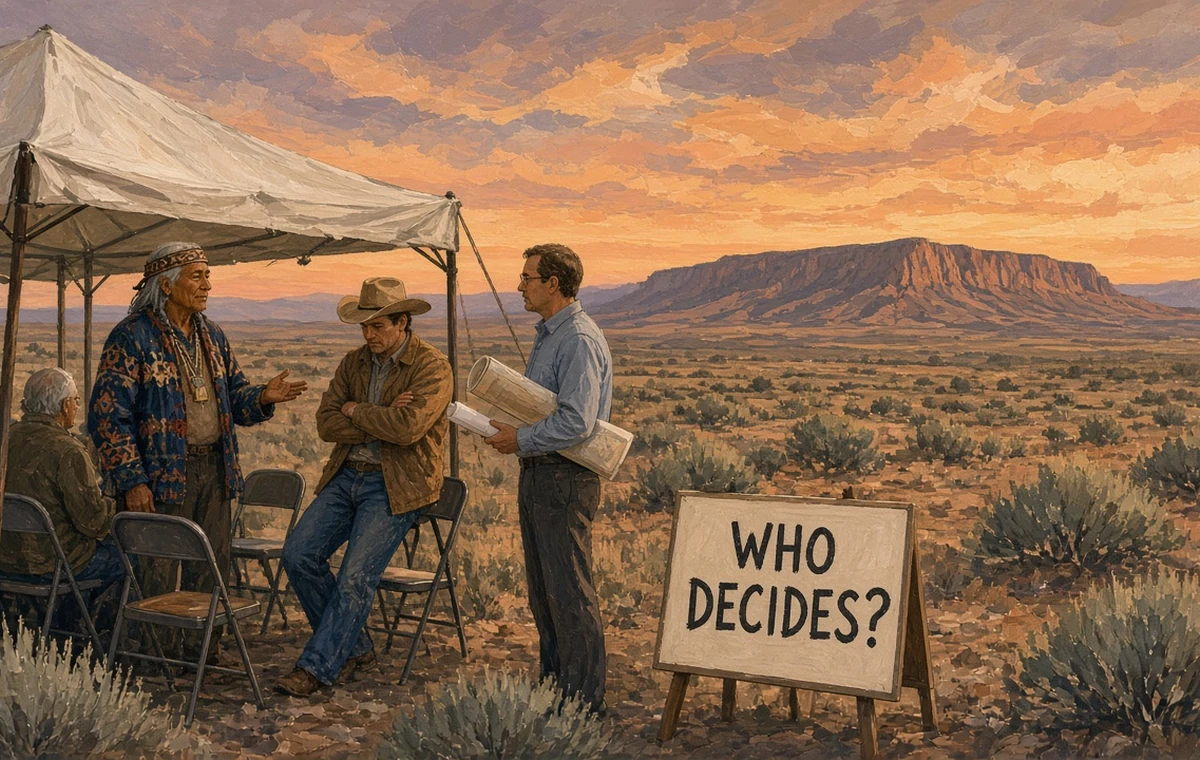
The UK switched to a voluntary, consent-based approach. West Cumbria, home to the Sellafield nuclear site, volunteered to explore hosting a geological disposal facility, but in January 2013 Cumbria County Council voted not to proceed to the next stage, ending that round even though two borough councils had supported continuing. The process was relaunched in 2018 around community partnerships with a right to withdraw and a test of public support before any final decision, and several areas in Cumbria and Lincolnshire have since entered and in some cases left the process.
| Case | Approach | Outcome | Lesson for practitioners |
|---|---|---|---|
| Buan, Korea (2003) | Local leader's bid, little prior consultation | Fierce resistance, plan dropped | Consent cannot be skipped |
| Gyeongju, Korea (2005) | Competing local referendums | 89.5% yes, site selected | Process matters, but fairness of the vote matters too |
| Yucca Mountain, US | Site chosen by federal law | Decades of conflict, project stalled | Imposed decisions are fragile |
| West Cumbria, UK | Voluntary process with right to withdraw | County council withdrew in 2013 | Consent must hold at every level of local government |
Read together, these cases show that technical safety cases alone have never been enough. Where people felt excluded, projects stalled; where they had a real say, progress became possible, even if slow.
How was a site finally chosen in Korea?
After Buan, Korea changed its method. In 2005 the government let candidate areas decide by referendum, and four cities, Gyeongju, Gunsan, Yeongdeok and Pohang, held votes for a low- and intermediate-level waste facility. Gyeongju recorded the highest approval, 89.5 percent, and was selected. Support packages included a special grant, relocation of the national nuclear operator's headquarters and a proton accelerator project, and the facility began full-scale disposal in 2015.
Gyeongju is often called a success, but critics raised questions about heavy local government campaigning and a high share of absentee votes. The point for practitioners is that holding a vote is not the same as a fair process; residents also need balanced information and enough time.
The bigger challenge remains. Gyeongju takes only low-level waste such as protective clothing and gloves. Korea's spent nuclear fuel is still stored at reactor sites, and a special act on high-level waste management passed the National Assembly in February 2025, reopening the question of how to choose a deep disposal site. Finland's Onkalo, the world's first permanent repository for spent fuel, is frequently cited as a reference.
What should community practitioners actually do?
The Korean source argues that, learning from Buan, communities need autonomous and democratic decision-making led by residents, with policies carried out on that basis. The general dynamics of facility conflicts are explained on our wiki page about NIMBY and facility siting conflict. The practitioner's role is not to deliver a verdict but to protect a process in which residents can decide with full information.
- Check that information is complete, independent and published in plain language.
- Make sure residents can take part directly, not only through officials.
- Give equal respect to supporters and opponents.
- Ask whether promised benefits are specific and enforceable.
- Plan from the start how neighbors will be reconciled after the decision.
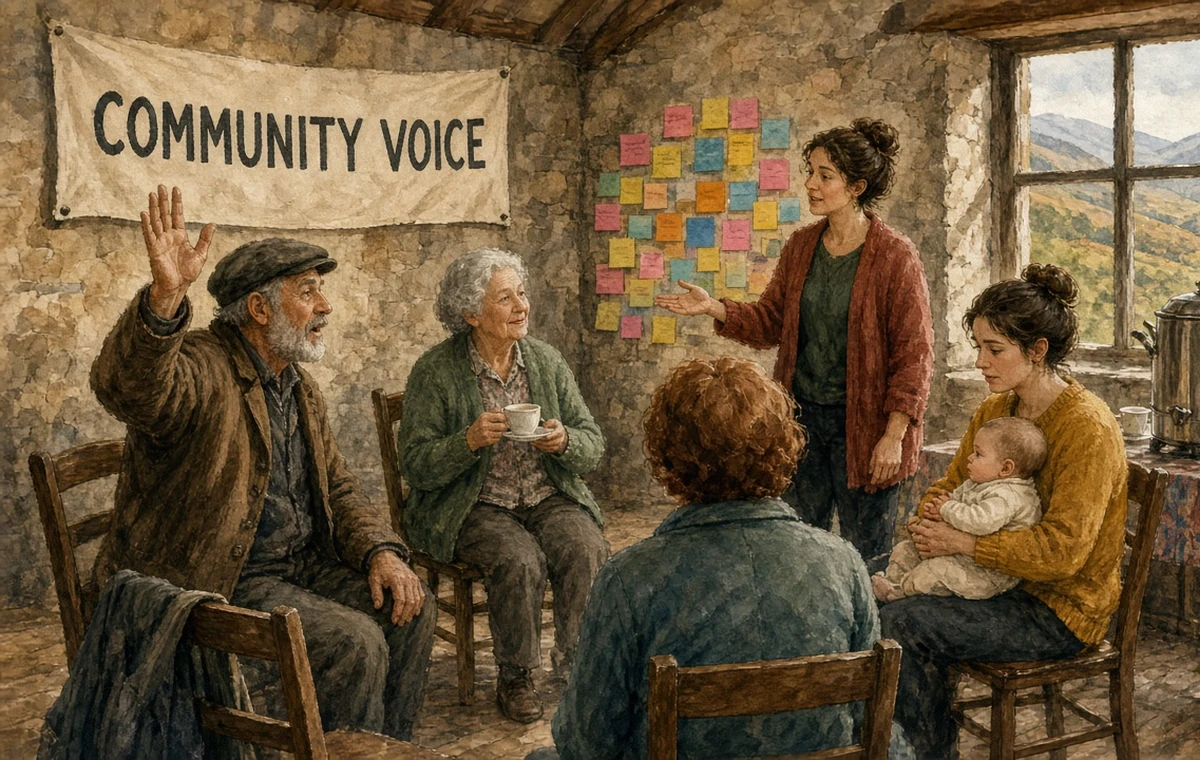
In practice that means preparing public meetings and debates, running outreach visits for people who rarely attend, such as older residents and fishing families, and, after a heated decision, organizing shared events or local projects that let divided neighbors work together again. Korea's 2017 citizens' deliberation on the Shin Kori 5 and 6 reactors, where a randomly selected panel studied the evidence before making a recommendation the government accepted, shows how structured deliberation can lower the temperature of such debates.
Why does a small town's decision become a national question?
Facilities like waste sites benefit a whole country while their burden falls on one place. That imbalance is why "we need it, but not here" reactions are so common, and why dismissing them as mere selfishness only deepens conflict. For a fishing community, the fear is about income, reputation and children's safety, and those worries deserve respect alongside technical assurances.
Student money tip on CampusDown Life Up: How to Find Unclaimed Money in Your Name.
So the difference between Buan and Gyeongju was less about the facility's hazards than about how much residents were respected in the decision. If you are writing an assignment on this topic, combining Buan with Gyeongju, the high-level waste challenge and one international case such as Yucca Mountain or Cumbria will let you explain the community practitioner's role in concrete, persuasive terms.
Common mistakes
- Treating siting purely as an engineering problem and ignoring trust and process.
- Labeling all local opposition as selfish NIMBYism.
- Assuming that any referendum automatically equals genuine consent.
- Forgetting the long work of reconciling neighbors after the decision.
Quick self-check
- Can you explain what changed between Buan in 2003 and Gyeongju in 2005?
- Can you contrast Alinsky-style organizing with asset-based community development?
- Can you name one lesson from Yucca Mountain and one from West Cumbria?
Compiled by the CampusDown editorial team from a Korean community welfare case study, Daniel P. Aldrich, Site Fights (Cornell University Press, 2008), public records on the US Nuclear Waste Policy Act and Yucca Mountain, UK government publications on geological disposal and public reporting on the Buan and Gyeongju cases. Reviewed November 2026. Educational overview, not policy or legal advice.
FAQ
What was the Buan nuclear waste conflict?
In 2003 a county head in southwest Korea applied to host a radioactive waste facility; residents protested for more than 20 months and the government dropped the plan.
How was Gyeongju different?
In 2005 candidate cities held referendums and Gyeongju, with 89.5 percent approval, was chosen for a low- and intermediate-level waste facility that began disposal in 2015.
What happened at Yucca Mountain?
US law designated Yucca Mountain in Nevada as the sole site to study in 1987, but strong state and tribal opposition and halted federal funding around 2010 left the project stalled.
Why did West Cumbria withdraw in 2013?
Cumbria County Council voted not to move to the next stage of the voluntary siting process, even though two borough councils supported continuing.
What is the community practitioner's role in siting conflicts?
To help residents get balanced information, voice all views, take part directly in the decision and rebuild relationships afterwards, rather than deciding for them.