
What Is Animal-Assisted Therapy? How It Differs From Animal Visits, Its Benefits and Hospital Precautions
- Animal-assisted therapy is a goal-directed intervention led by a professional working with a trained animal.
- Bonding with animals is linked to physiological changes such as higher oxytocin and lower stress responses.
- In hospital, animal health checks, hand hygiene and patient screening are essential infection control steps.
Contents
Animal-assisted therapy (AAT) is a planned, goal-directed treatment in which a health or care professional works with a trained animal to reach specific outcomes for a patient, with progress measured and recorded; a friendly dog visiting a care home for fun is animal-assisted activity, not therapy. When a child in hospital strokes a therapy dog and the tension finally leaves her face, is it just a passing mood? Meeting an animal can calm people, but it can also get them talking and moving again. Turning those effects into deliberate treatment is what AAT is about, and running it well means understanding the risks as well as the benefits.
How does animal-assisted therapy differ from animal-assisted activity?
The two are often mixed up, but they differ in purpose, in who leads them and in how they are evaluated.
Related on CampusDown Law UpCan I Have an Emotional Support Animal in a No-Pets Apartment? — Can you have an emotional support animal in a no-pets apartment?
| Aspect | Animal-assisted therapy (AAT) | Animal-assisted activity (AAA) |
|---|---|---|
| Goal | Specific treatment goals for an individual patient | General enjoyment, comfort and quality of life |
| Led by | A health or counselling professional who plans and records it | Can be a trained volunteer and animal team |
| Evaluation | Progress towards goals is measured and documented | Usually no formal evaluation |
A dog visiting a care home to play is closer to animal-assisted activity. A stroke patient brushing a dog to regain hand function, following a plan with goals and an evaluation, is animal-assisted therapy. Because the distinction changes how a programme's effects are explained and judged, a project proposal or assignment should state clearly which one it describes.
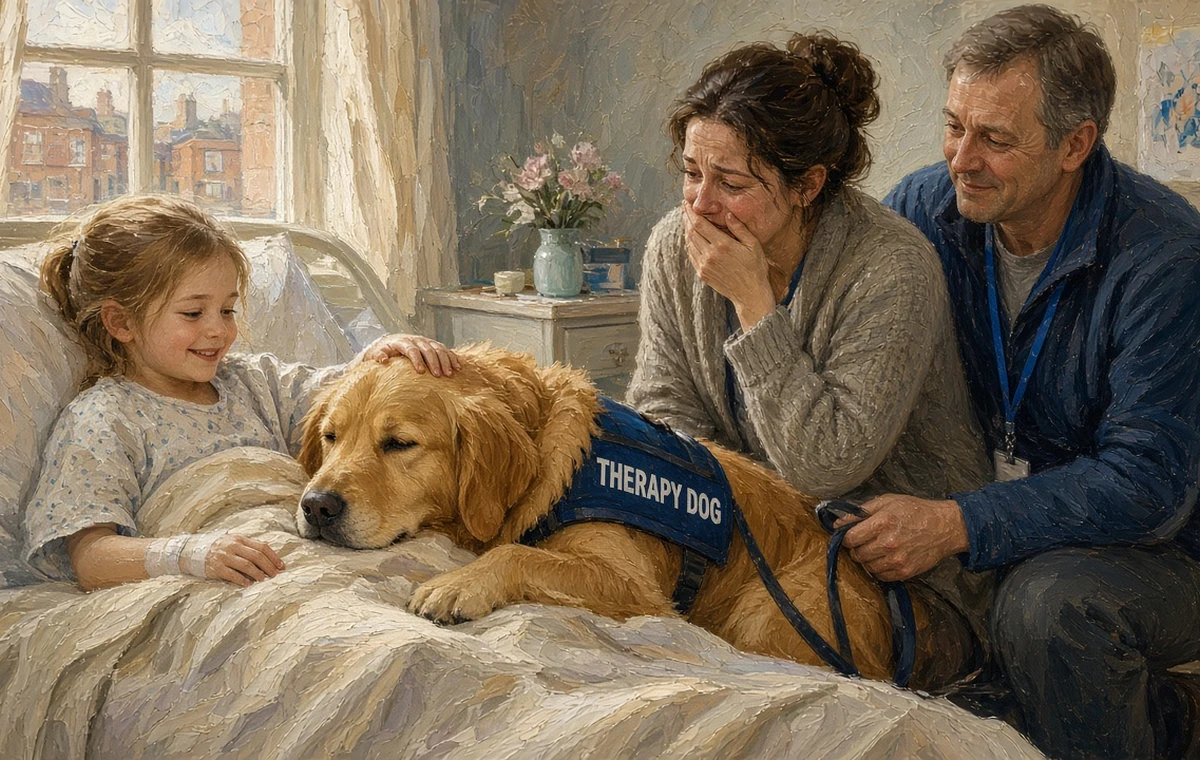
Why can an animal reach a child when adults cannot?
A dog does not ask how the pain is today or whether the medicine has been taken. Children who have withdrawn after weeks of procedures often respond to an animal first, and that small opening can make it easier for nurses and play specialists to reach them afterwards.
In the UK, the charity Pets As Therapy has run volunteer visits with assessed dogs and cats since 1983, and many hospitals and hospices now host such visits. In the US, organisations such as Pet Partners register therapy animal teams. Most of these visits are animal-assisted activity; they become therapy only when a professional sets goals and measures progress.

What benefits can be expected?
Studies and programmes usually describe benefits in four areas.
- Emotional: less anxiety and loneliness, better mood
- Physical: exercise and fine motor practice through stroking, walking and brushing
- Social: more conversation and interaction, with the animal as a shared topic
- Cognitive: attention and responsibility built through caring tasks
For children who find relationships hard, people with mental illness, and older adults who have stopped talking much, an animal offers an easy, low-pressure way in. Effects vary a great deal with a person's feelings about and experience of animals, though, so nobody who is afraid of animals or has had a bad experience should be pushed to take part.
Skimming the section headings first makes a long guide much easier to map out. Try writing down one question of your own as you read.
How do the effects come about?
Odendaal and Meintjes (2003) reported that after a period of friendly interaction between people and dogs, levels of oxytocin, a hormone linked to bonding, rose in both the people and the dogs. Other studies describe falls in tension and steadier heart rate and blood pressure when an animal is present, and some have found lower levels of the stress hormone cortisol.
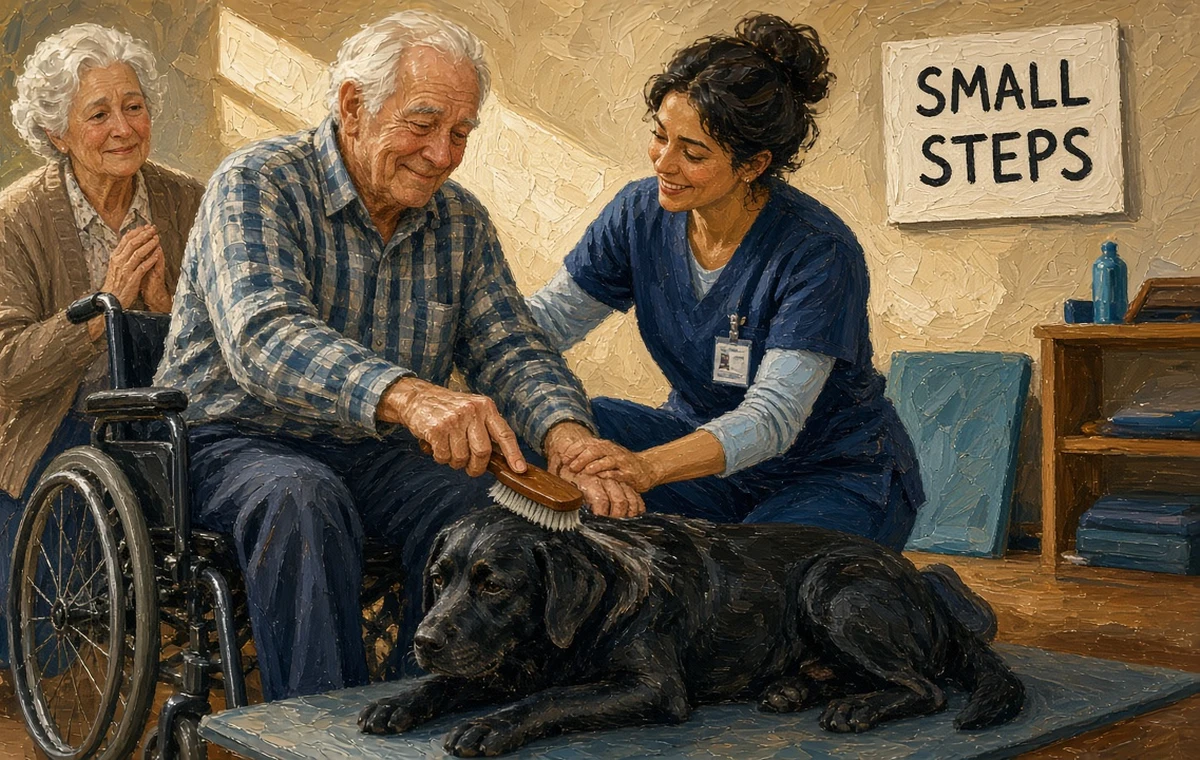
Is it only hormones, or something more?
Psychologically, an animal accepts people without judging them, which creates a sense of safety. Socially, it acts as a bridge for conversation. Most researchers think several of these mechanisms work together. The evidence is still mixed, and many studies are small, so it is better to set modest, measurable goals than to promise dramatic results.
That caution matters for anyone writing a proposal. Saying that AAT "reduces anxiety" is stronger if the plan names a validated anxiety scale, when it will be used, and how results will be compared with usual care.
What precautions are needed in hospital?
| Area | What to check |
|---|---|
| Animal | Vaccinations, parasite control, regular health checks and a behaviour assessment |
| Patient | Animal allergy, weakened immunity, open wounds and fear of animals screened in advance |
| Hygiene | Hand hygiene before and after contact; limits on where and when the animal goes |
| Records | Who took part, which animal, how they responded and any incidents |
Infections that can pass from animals to people are a real risk for patients with weakened immune systems, so criteria should be agreed with the infection prevention and control team. Nurses can screen patients, observe vital signs, mood and pain before and after sessions, and check that hygiene rules are followed, while the animal handler watches the animal and runs the session.
The animal's welfare matters too. Limiting the length of each session and the number of sessions a day, and letting the animal rest as soon as it shows discomfort, is what keeps a programme sustainable.
How are animal-assisted interventions classified, and what about the animals?
IAHAIO, the international association of organisations working on human–animal interaction, set out a widely used classification in its white paper. Animal-assisted therapy is led by a health or counselling professional with treatment goals; animal-assisted education is led by teachers for learning goals; animal-assisted activity offers comfort and enjoyment without set treatment goals. A later revision added animal-assisted coaching for personal growth.
Also on CampusDown Law Up: Can I Have an Emotional Support Animal in a No-Pets Apartment?
For animal welfare, many programmes use the Five Freedoms: freedom from hunger and thirst, from discomfort, from pain, injury and disease, freedom to express normal behaviour, and freedom from fear and distress. In practice that means water, rest and the right to stop. A dog that yawns repeatedly, licks its lips, tucks its tail or tries to move away may be stressed and should be given a break. Not every dog is suited to therapy work, and accepting that is part of good welfare.

Therapy animals are also different from assistance dogs. Under the Americans with Disabilities Act, service animals are dogs individually trained to do tasks for a disabled person and may accompany them in most public places; therapy and emotional support animals do not have the same access rights. In the UK, the Equality Act 2010 protects disabled people who use assistance dogs, but a therapy dog visiting a ward is there by the hospital's invitation, not as of right.
| Type | Purpose | Led by |
|---|---|---|
| Animal-assisted therapy | Specific treatment goals | Health or counselling professional |
| Animal-assisted education | Learning goals | Teacher or education specialist |
| Animal-assisted activity | Comfort and enjoyment | Trained volunteer or professional |
| Animal-assisted coaching | Personal growth and goals | Coaching professional |
For an assignment, say first which of these types the example programme belongs to, then match the evaluation method to it. AAT works best as a complement to standard care, run with careful planning, infection control and respect for the animal.
Compiled by the CampusDown editorial team from a Korean article on animal-assisted therapy, adapted with public information on IAHAIO definitions, Pets As Therapy in the UK, Pet Partners and the Americans with Disabilities Act in the US, and the UK Equality Act 2010. Source: Odendaal, J. S. J., & Meintjes, R. A. (2003). Neurophysiological correlates of affiliative behaviour between humans and dogs. The Veterinary Journal, 165(3), 296–301. Reviewed November 2026. This is general information, not medical advice.
FAQ
Which animals take part in animal-assisted therapy?
Dogs are the most common, but cats, rabbits and horses can also take part after training and health assessment.
Can people with animal allergies take part?
It depends on how severe the allergy is, but they are usually excluded from direct-contact sessions and offered an alternative.
Does animal-assisted therapy replace medical treatment?
No. It is used alongside standard treatment as a complementary intervention.
Is a therapy dog the same as a service dog?
No. Service and assistance dogs are trained to help one disabled person and have legal access rights; therapy dogs visit many people by invitation.
How long should a therapy animal work?
Sessions should be short with regular breaks, a daily limit, water and a quiet place to rest, and should stop if the animal shows stress.