
Angina or Heart Attack? How to Tell the Difference, What to Do in the First Minutes and Cardiac Rehab in the US and UK
- Angina is a temporary oxygen shortage in heart muscle; a heart attack means the muscle is being damaged.
- New, worsening or resting chest pain, or pain lasting more than about five minutes, needs an ambulance.
- ECG, troponin and fast PCI guide hospital care, and cardiac rehab helps prevent another event.
Contents
Chest tightness while climbing stairs that eases after a short rest, and crushing chest pain with cold sweat that does not go away, can look alike but call for very different responses. Both angina and a heart attack (myocardial infarction) come from narrowed coronary arteries, but in one the heart muscle is short of oxygen for a while and in the other part of it is dying. This guide, adapted from a Korean nursing study note, explains coronary anatomy, how atherosclerosis develops, how to tell angina from a heart attack, what to do in the first minutes, and how emergency care and cardiac rehabilitation work in the United States and the United Kingdom.
How are the heart and its coronary arteries built?
The heart is a muscular pump about the size of a fist that beats around a hundred thousand times a day. Its own muscle is fed not by the blood passing through its chambers but by the coronary arteries that wrap around its surface like a crown.
Student money tip from CampusDown Law UpThe ER Bill Says "Out of Network" and My Wallet Just Fainted — Hit with a surprise out-of-network ER bill on a student budget?
- Left anterior descending artery (LAD): supplies the front wall and much of the main pumping chamber, which is why a blockage here is often serious.
- Left circumflex artery (LCx): runs around the side and back of the left ventricle.
- Right coronary artery (RCA): supplies the right side and, in most people, the area that houses the heart's natural pacemaker.
Knowing which artery feeds which wall helps nurses understand why ECG changes in certain leads point to certain blockages, and why some heart attacks come with slow heart rhythms.

How does atherosclerosis narrow the arteries?
Coronary heart disease starts years before any symptom. Cholesterol-rich plaque builds up inside the artery wall, inflammation follows, and the channel slowly narrows. The process is described in the wiki entry on atherosclerosis. Risk factors include high blood pressure, high LDL cholesterol, diabetes, smoking, obesity, physical inactivity, a family history of early heart disease and older age.
A stable plaque that narrows the channel causes angina when the heart needs more oxygen. The real danger comes when a plaque cracks: a blood clot forms on the surface within minutes and can block the artery completely. That is the moment a heart attack begins, and it can happen in a plaque that did not look severe before.
This is why lifestyle change and medicines that lower LDL cholesterol and blood pressure matter even for people without symptoms. They slow plaque growth and make plaques less likely to rupture, which lowers the chance of a sudden event.
Skimming the section headings first makes a long guide much easier to map out. Try writing down one question of your own as you read.
How do angina and a heart attack differ?
| Feature | Stable angina | Heart attack |
|---|---|---|
| Trigger | Exertion, cold air, stress | Often at rest or without a clear trigger |
| Duration | A few minutes, eases with rest | Persists, often longer than 15 to 20 minutes |
| Nitroglycerin | Usually relieves it | Little or no relief |
| Other signs | Usually few | Cold sweat, breathlessness, nausea, fear |
| Heart muscle | Temporarily short of oxygen | Damaged; troponin rises |
The source treats the two as a simple pair, but one middle category matters a great deal. Angina that is new, getting worse or happening at rest is called unstable angina. Together with heart attacks it forms acute coronary syndrome, and it should be treated as an emergency. Women, older adults and people with diabetes may also have atypical symptoms such as breathlessness, unusual tiredness, indigestion-like discomfort or pain in the jaw, back or arm, sometimes with little chest pain. The full picture is covered in the wiki entry on myocardial infarction.
Every minute counts because heart muscle that loses its blood supply begins to die within a short time, and the damage spreads the longer the artery stays blocked. Recognising the pattern early is the most important thing a patient, family member or nurse can do.
What should you do in the first minutes?

The source advises calling emergency services if chest pain lasts more than twenty minutes. That threshold is too late for the public and needs correcting. Current advice is to call an ambulance if chest pain lasts more than about five minutes, keeps getting worse, or is not relieved five minutes after one dose of nitroglycerin in someone who already has it prescribed. Do not drive yourself to hospital.
- Nitroglycerin: sit down, take one tablet under the tongue or one spray, and follow your doctor's plan for repeat doses; never take it within a day or two of erectile dysfunction drugs such as sildenafil or tadalafil, because blood pressure can fall dangerously.
- Storage: keep tablets in their original container and replace them by the expiry date.
- If the person collapses: start chest compressions and use an automated external defibrillator (AED) as soon as one arrives.
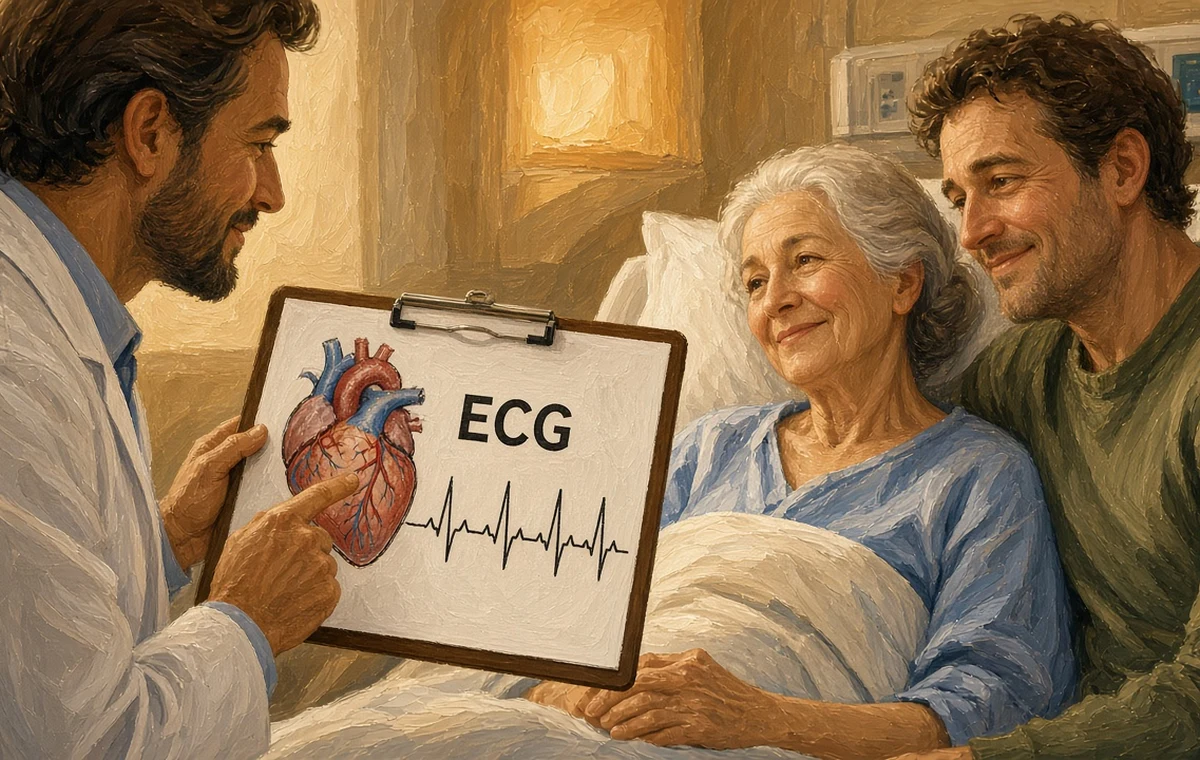
In hospital, a 12-lead ECG is recorded within minutes, and blood is tested for troponin, a protein released by damaged heart muscle that has largely replaced the older cardiac enzymes. If a major artery is completely blocked, the preferred treatment is primary percutaneous coronary intervention (PCI): a catheter through the wrist or groin opens the artery with a balloon and stent. Clot-dissolving drugs are used when PCI cannot be done quickly enough. Nurses watch the puncture site, rhythm, blood pressure and pain closely afterwards.
How do the US and UK handle heart attacks and recovery?
United States
The American Heart Association tells people to call 911 rather than drive, because paramedics can record an ECG and alert the hospital on the way. Dispatchers may advise chewing an aspirin if the person is not allergic. Hospitals aim to open a blocked artery as fast as possible after first medical contact, and cardiac rehabilitation after a heart attack, stent or bypass surgery is covered by Medicare, although many eligible patients never attend.
United Kingdom
In the UK the number is 999. NHS advice for people prescribed a GTN spray is to take a dose and, if the pain has not gone after five minutes, take a second; if it is still there five minutes later, call 999. The NHS also suggests chewing a 300 mg aspirin while waiting if it is easily available and the person is not allergic. NICE guidance sets the treatment pathway for acute coronary syndromes and recommends that cardiac rehabilitation be offered to everyone after a heart attack.
| Item | United States | United Kingdom | Korea (source country) |
|---|---|---|---|
| Emergency number | 911 | 999 (112 also works) | 119 |
| Nitro advice | Call if no better 5 minutes after one dose | Second dose after 5 minutes, then 999 | Follow the prescription plan |
| Cardiac rehab | Covered by Medicare | Offered on the NHS | Insurance-covered programmes at many hospitals |
Whatever the country, the pattern is the same: call early, let professionals start treatment on the way, and treat recovery as part of the treatment rather than an optional extra.
What should nurses watch and teach during recovery?

Student money tip on CampusDown Law Up: The ER Bill Says "Out of Network" and My Wallet Just Fainted.
After treatment, nurses monitor chest pain, heart rhythm, blood pressure, breathing and the catheter site, and watch for complications such as arrhythmia or heart failure. Emotional support matters too: fear, low mood and anxiety are common after a heart attack and can slow recovery.
| Treatment | Used for | Key nursing point |
|---|---|---|
| Nitroglycerin | Relieving angina | Sitting down, headache and dizziness, no ED drugs |
| Stent (PCI) | Opening a narrowed or blocked artery | Do not stop antiplatelet drugs without the cardiologist |
| Bypass surgery (CABG) | Several or complex blockages | Wound care, breathing exercises, early mobilisation |
| Cardiac rehabilitation | Everyone after a coronary event | Gradual exercise, diet, quitting smoking, mood support |
Discharge teaching covers taking antiplatelet drugs and statins exactly as prescribed, controlling LDL cholesterol, blood pressure and blood sugar, stopping smoking, gradually increasing activity, and knowing when to call for help. Encouraging family members to learn CPR and where the nearest AED is turns a frightening event into a plan.
- Angina is temporary oxygen shortage; a heart attack is muscle damage.
- New, worsening or resting angina is an emergency.
- Call for help if chest pain lasts more than about five minutes.
- Troponin and ECG guide diagnosis; PCI is preferred.
- Cardiac rehabilitation lowers the risk of another event.
FAQ
When does angina usually happen?
During exertion, cold or stress, and it eases within minutes with rest or nitroglycerin.
How long should I wait before calling for chest pain?
No more than about five minutes, or sooner if it is severe, worsening or not eased by one nitro dose.
Which tests confirm a heart attack?
A 12-lead ECG and a blood test for troponin, followed by coronary angiography when needed.
What are the main coronary arteries?
The left anterior descending, the left circumflex and the right coronary artery.
Why is cardiac rehabilitation important?
Supervised exercise, education and support improve fitness and lower the risk of another heart event.