
Why Do Ad Jingles Get Stuck in Your Head? Advertising Appeals, Message Structure and Spokesperson Strategy
- Advertising is paid, non-personal communication about products, services or ideas by an identified sponsor.
- Message strategy combines two decisions: what to say and how to say it, through rational or emotional appeals.
- Catchy jingles and well-matched spokespeople boost recall, but overuse can turn attention into irritation.
Contents
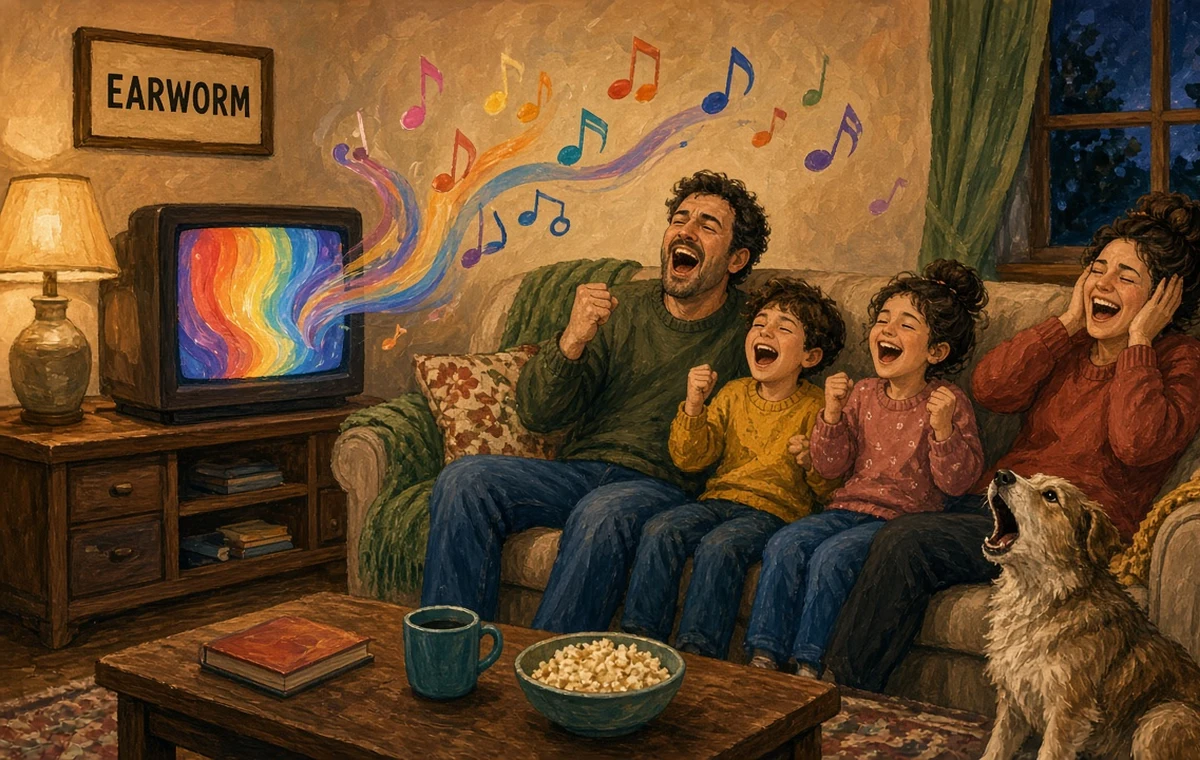
An advertising appeal is the reason an ad gives you to care, either rational (price, features, proof) or emotional (joy, fear, belonging, humor), and the message structure is how that reason is packaged, from the order of claims to the jingle, the spokesperson and the repetition that make a slogan stick in your head all day. If you have ever caught yourself humming a phone number you never meant to memorize, you have experienced a perfectly executed message strategy.
The original Korean case study behind this guide analyzed a 2018 ad for the Korean travel and accommodation app Yanolja, which paired a popular K-pop idol with a relentlessly catchy song and dance. Here we keep that case as one brief anchor and rebuild the analysis around ads English speakers know well, from the Kars4Kids radio jingle in the US to the Compare the Market meerkats in the UK, so you can apply the same theory to your own coursework or campaign.
How is advertising defined?
Most textbooks define advertising as paid, non-personal communication about an organization, product, service or idea by an identified sponsor. Each part of that definition matters. "Paid" separates ads from publicity and word of mouth. "Non-personal" means it travels through media rather than a salesperson. "Identified sponsor" is why regulators in both countries insist that ads be recognizable as ads.
Student money tip from CampusDown Life UpHow to search official databases for unclaimed money in your name — free state and federal searches, and how to avoid paid finders and scams.
The definition also implies five building blocks: a sponsor, an objective, a message, a target audience and a medium. Breaking any ad into these parts is the quickest way to start an analysis, because you can ask who is talking to whom, saying what, through which channel and to achieve which goal.
Regulation follows the same logic. In the US, the Federal Trade Commission's Endorsement Guides require influencers to disclose paid relationships clearly, and in the UK the Advertising Standards Authority enforces the CAP Code, which expects labels such as "#ad" on paid social posts. If the audience cannot tell who the sponsor is, the ad fails the definition and may break the rules.

What are the two halves of message strategy?
The first half is what to say. This is the core message idea, the one benefit you want to own in the consumer's mind. It requires thinking from the buyer's side: not "our app has 20,000 listings" but "you can book tonight's room in two taps." Rossiter and Percy call this choosing the benefit claim that best connects the brand to the purchase motivation.
The second half is how to say it: choosing an appeal type and a structure. The classic split is between rational appeals, which lean on facts, comparisons and demonstrations, and emotional appeals, which use humor, warmth, nostalgia, fear or music. Structure covers choices like whether to give a one-sided or two-sided argument, whether to state the conclusion or let viewers draw it, and whether the key line comes first or last.
| Appeal | How it works | Typical example | Best for |
|---|---|---|---|
| Rational | Facts, price, side-by-side tests | Comparison sites and supermarket price-match ads | High-involvement purchases where buyers research |
| Emotional: humor | A character or joke that viewers want to see again | The Compare the Market meerkats and their catchphrase "Simples" | Dull categories such as insurance |
| Emotional: warmth | Story-driven, often seasonal | UK Christmas TV ads from big retailers | Building long-term brand affection |
| Musical repetition | A simple tune carrying the brand name or number | The Kars4Kids jingle repeating its phone number | Recall of a name or number, often at the cost of irritation |
The two halves only work together. A brilliant benefit delivered in the wrong tone is forgotten, and a hilarious ad that never connects to the benefit becomes the classic "I loved that ad, but who was it for?" problem.
Skimming the section headings first makes a long guide much easier to map out. Try writing down one question of your own as you read.
Why do jingles become earworms?
Psychologists call earworms involuntary musical imagery, and researchers in the UK have found that songs most likely to get stuck tend to have a fairly fast tempo, a simple and familiar melodic shape and one or two unusual leaps or repetitions that make them distinctive. Ad jingles are often engineered with exactly these ingredients, plus constant repetition across radio, TV and streaming.
The Kars4Kids jingle is a textbook case. Its phone number is sung again and again in a simple tune, and many listeners say they find it irritating, yet they also remember it. That is the trade-off: repetition and catchiness build recall, but overdoing them can damage how people feel about the brand. A good strategist decides deliberately which side of that line to stand on.
A useful model here is AIDA, credited to the early advertising pioneer E. St. Elmo Lewis: Attention, Interest, Desire, Action. A jingle is mostly an attention and memory device. It still needs a clear benefit to create interest and desire, and a simple next step, such as a number or app name, to trigger action.
Why does the spokesperson matter?
The Korean source draws on source attractiveness theory: celebrities are usually rated high on physical attractiveness and likability, while experts score high on credibility, sometimes called psychological attractiveness. Advertisers should therefore work out which kind of attractiveness their audience values for that product before choosing a face.
In English-language research this links to the match-up hypothesis: a spokesperson works best when their image fits the product. An athlete for sports drinks, a doctor-like figure for a toothpaste claim, a cartoon animal for a light-hearted insurance brand. The meerkats show that the "celebrity" does not even need to be human; a well-built character can deliver likability without the risks of a real star's scandals or fees.

Celebrity strategy also brings obligations. Under FTC and UK ASA rules, a star promoting a product in a paid social post must label it as an ad, and claims they make must be ones the brand can substantiate. In other words, borrowed attractiveness does not excuse misleading content.
How does the Yanolja case map onto the theory?
The Korean case is a compact illustration of all four decisions working together, and it translates easily into the frameworks above.
- What: the benefits of booking travel and stays through the app.
- How: a catchy song plus a simple, repeated dance move.
- Spokesperson: a popular idol group member, drawing on celebrity attractiveness.
- Timing: aired from June 2018, ahead of the summer travel season.
The source argues that the distinctive tune grabbed attention first and the repeated choreography helped memory. For a US or UK student, a parallel analysis of Kars4Kids or the meerkats would follow exactly the same four lines.
What are the two faces of advertising?
To pull the comparison together, here is how the theory, the Korean case and an English-language example line up side by side.
Student money tip on CampusDown Life Up: How to search official databases for unclaimed money in your name.
| Element | Theory | Korean case (Yanolja, 2018) | English-language example |
|---|---|---|---|
| What to say | Core benefit idea | Easy travel and stay booking | Meerkats: comparing insurance is simple |
| How to say it | Appeal type and structure | Song and dance | Kars4Kids: sung phone number |
| Spokesperson | Attractiveness and match-up | Popular idol | Animated character as brand mascot |
| Risk | Wear-out and irritation | Over-exposure | Listeners finding a jingle annoying |
The Korean source concludes that advertising has both positive and negative functions, and that brands need strategies that are memorable yet built on an appropriate message structure. Catchiness without substance can win attention but lose trust. For more on how one ad fits into a whole campaign, see our wiki pages on integrated marketing communications and consumer decision-making and impulse buying.
When you write up an ad analysis, using this vocabulary lets you explain why a campaign worked, rather than simply saying it was catchy, which is exactly what markers and clients want to see.
Common mistakes
- Describing an ad as "catchy" without naming the appeal type or structure.
- Assuming any celebrity will help, ignoring the match-up between person and product.
- Confusing recall with liking; an irritating jingle can be memorable and still harm the brand.
- Forgetting disclosure rules for influencer and celebrity posts.
Quick self-check
- Can you name the two halves of message strategy?
- Can you give one rational and one emotional appeal from ads you saw this week?
- Can you explain why a cartoon mascot might be safer than a human celebrity?
Compiled by the CampusDown editorial team from a Korean advertising case study, Rossiter and Percy, Advertising Communications and Promotion Management (2nd ed., McGraw-Hill, 1997), FTC Endorsement Guides and UK CAP Code guidance, and published research on earworms. Reviewed November 2026.
FAQ
What are the two elements of message strategy?
What to say, meaning the core benefit idea, and how to say it, meaning the appeal type and the structure of the message.
What is the difference between rational and emotional appeals?
Rational appeals use facts, prices and comparisons; emotional appeals use humor, warmth, nostalgia, fear or music to create feelings about the brand.
Why do ad jingles become earworms?
They tend to use simple, fast, repetitive melodies with a distinctive twist, and they are repeated often across media, which makes them hard to forget.
What is source attractiveness theory?
It holds that celebrities are valued for physical attractiveness and likability, while experts are valued for credibility, so the choice should match what the audience values.
Do celebrity and influencer ads need to be labeled?
Yes. In the US the FTC Endorsement Guides and in the UK the ASA's CAP Code require paid promotions to be clearly identifiable as ads.